

Gated Community Master Plans in Kenya: Estate Layouts, Clubhouses, Gatehouses, Roads and Shared Amenities
By the HousePlans Kenya design team · 4 October 2026 · 11 min read
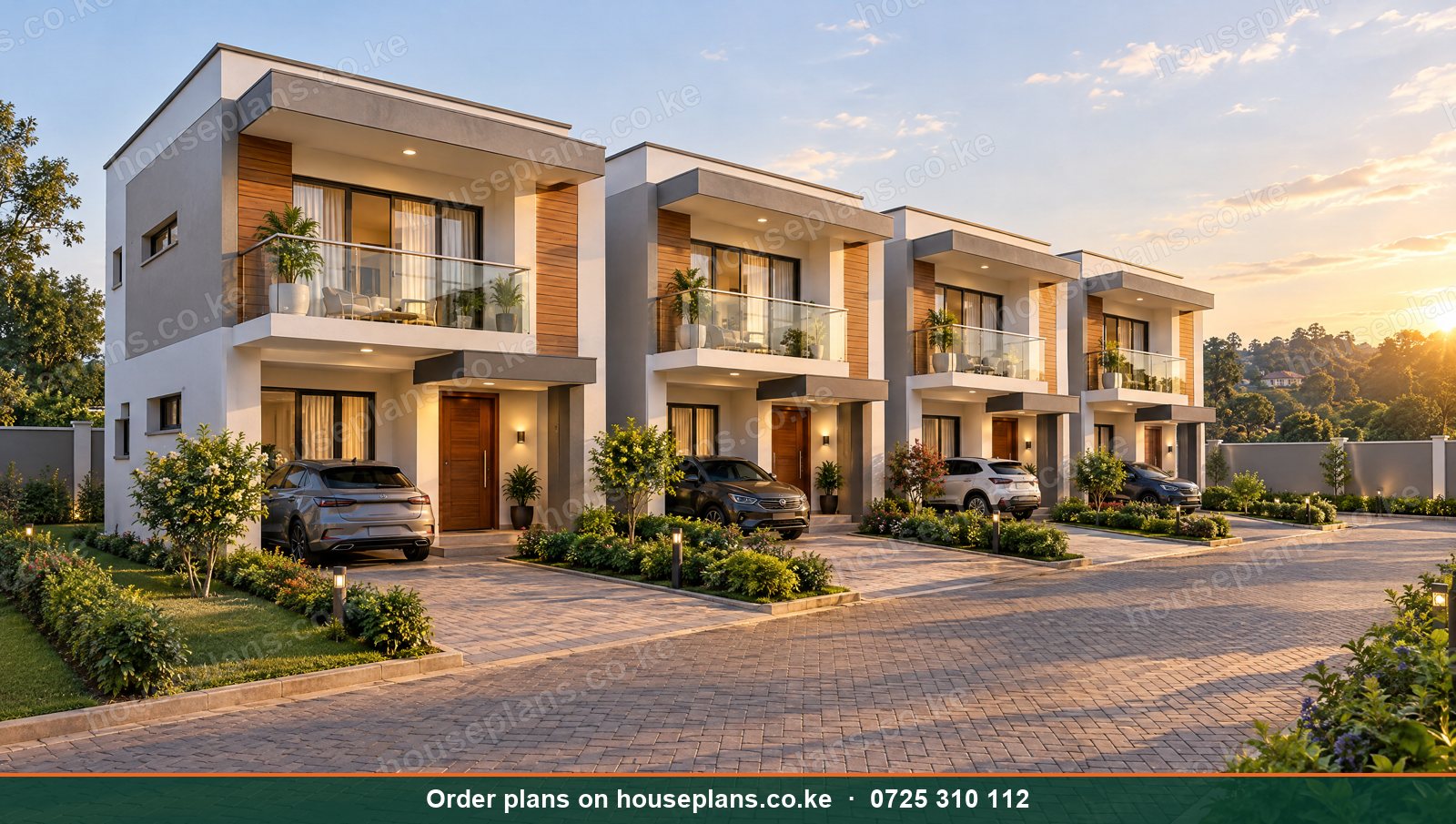
Gated community master plans in Kenya turn raw land into secure, attractive neighbourhoods. Buyers today want more than a house. They want safe streets for children, reliable water, good roads, green spaces and a sense of community. Consequently, gated estates in Kitengela, Syokimau, Athi River, Ruiru, Kiambu Road, Ongata Rongai and Nakuru sell faster and command higher prices than isolated plots. However, the success of an estate depends heavily on its master plan.
This guide explains how to plan gated communities in Kenya. We cover site analysis, plot layouts, house types, roads and parking, gatehouses and perimeter security, clubhouses, pools, playgrounds, jogging tracks, utilities, phasing, sectional titles, approvals and marketing. Additionally, we share mistakes to avoid and tips for land bankers and developers.
Talk to an architect today
Call 0725 310 112 or chat with us on WhatsApp. Send your plot size, county and the number of bedrooms, and we will reply with a quote the same day.
What Is a Master Plan?
A master plan is the big-picture layout of an estate. It shows where plots, houses, roads, open spaces, amenities, utilities and entrances go. Moreover, it sets design guidelines for houses, walls and landscaping. Consequently, every later decision follows a clear vision.
Site Analysis
Survey and Topography
First, a surveyor maps boundaries, levels, trees, rocks, watercourses and existing structures. Therefore, the plan responds to the real land.
Soil and Drainage
Black cotton soil, rock and flood-prone areas affect where houses and roads go. For example, low-lying areas may become green spaces or retention ponds. Read about sloping plot house plans.
Access and Surroundings
Access roads, neighbouring land uses, views, noise sources and public transport all influence the layout. Consequently, the main gate usually faces the best access road.
Zoning and Density
County zoning sets permitted density, plot sizes and uses. Therefore, the number of units depends on the rules. Read about land and planning documentation.
Estate Types
Serviced Plot Estates
Developers subdivide land, build roads, walls and utilities, and sell serviced plots. Buyers then build their own homes, often following design guidelines.
House-and-Plot Estates
Developers build complete homes, such as bungalows, maisonettes or townhouses, and sell them individually. Consequently, the estate looks consistent from the start.
Townhouse Compounds
Smaller compounds of four to twenty townhouses suit quarter-acre to two-acre sites. Read about townhouse and semi-detached house plans.
Apartment Estates
Larger estates combine apartment blocks with amenities and green spaces. Read about multi-storey apartment building plans.
Mixed Estates
Mixed estates combine plots, houses, apartments and commercial areas, such as shops and schools, creating complete neighbourhoods.
Plot Layouts
Plot Sizes
Common estate plot sizes include 40×80, 50×100 and quarter acres. Smaller plots increase numbers, while larger plots attract premium buyers. Therefore, the target market decides the mix.
Orientation
Plots oriented so houses face north or south enjoy better light and comfort. Moreover, views and privacy should be considered.
Corner and Premium Plots
Corner plots, plots facing parks and plots with views can be priced higher. Consequently, the layout can create several premium positions.
House Type Mix
A good estate offers several house types. For example, two bedroom bungalows attract young couples and retirees, three bedroom maisonettes attract growing families, and four bedroom homes with DSQs attract established buyers. Consequently, a mix widens the market and speeds sales. Moreover, a consistent architectural style across types keeps the estate coherent. Our Kiambu townhouses, Kitengela maisonette, Syokimau maisonette and Baraka bungalow are popular estate house types. Browse maisonette house plans.
Parking and Visitor Management
Every home needs parking, and visitors need somewhere to park too. Therefore, plan one or two bays per home plus visitor parking near the gate or in pockets throughout the estate. Moreover, a visitor management system at the gatehouse records arrivals. As a result, roads stay clear for emergency vehicles.
Roads and Circulation
Estate roads must allow cars, delivery trucks, refuse vehicles and emergency services. Typically, main roads are wider, while cul-de-sacs serve smaller groups of homes. Moreover, cul-de-sacs reduce through traffic, which improves safety. Additionally, roads need drainage, street lighting and kerbs. Cabro or tarmac surfaces last longer than murram. Read about garage, carport and driveway designs.
Gatehouse and Perimeter Security
Security is the main reason buyers choose gated estates. Therefore, the master plan includes a strong perimeter wall or fence with electric fencing, a gatehouse with guard rooms and toilets, visitor parking outside the gate, boom barriers or sliding gates, CCTV and access control. Moreover, a separate pedestrian gate and a service entrance improve control. Read about home security design in Kenya.
Shared Amenities
Clubhouse
A clubhouse may include a lounge, a gym, a function hall, a café and management offices. Consequently, it becomes the social heart of the estate.
Swimming Pool
A pool with a deck and changing rooms is a strong selling point, especially in warm areas such as Kitengela, Athi River and Machakos.
Children's Playground
Safe playgrounds near homes, visible from houses, attract families.
Jogging Track and Walking Trails
A track around the estate perimeter or through green spaces encourages exercise.
Sports Courts
Tennis, basketball and five-a-side pitches suit larger estates. Read about sports and entertainment facility plans.
Green Spaces and Parks
Parks, tree-lined streets and gardens improve wellbeing and property values. Moreover, they help manage stormwater.
Pet Parks
Dog walking areas are increasingly popular with pet owners.
Utilities and Infrastructure
Water
Many estates rely on boreholes, large storage tanks and distribution networks. Consequently, reliable water is a major selling point. Read about water and power planning for Kenyan homes.
Sewerage
Where no public sewer exists, estates need a treatment plant or individual biodigesters. Therefore, plan sewerage carefully.
Power
Power lines, transformers and street lighting need coordination with the power utility. Moreover, solar street lights reduce running costs.
Stormwater
Roads, drains, culverts and retention areas prevent flooding.
Fibre Internet
Ducts for fibre internet make homes ready for remote work and streaming.
Design Guidelines
Design guidelines keep the estate attractive. For example, they may control roof types, colours, heights, setbacks, boundary walls and extensions. Consequently, buyers know what their neighbours can build. Moreover, consistent design protects property values. Read about exterior house design in Kenya.
Land Banking and Plot Estates
Many Kenyan investors buy land early, subdivide it and sell serviced plots as an area grows. This is often called land banking. However, success depends on legal subdivision, clean titles, access roads, water and a credible master plan. Consequently, estates with beacons, graded roads, a perimeter fence, a gate and water sell faster and at higher prices than bare land. Moreover, clear design guidelines reassure buyers that neighbours will build attractive homes. Therefore, even simple plot estates benefit from professional planning.
Diaspora and Off-Plan Buyers
Gated estates attract many diaspora buyers, who value security and management. Consequently, developers should provide clear documentation, regular progress updates, renders and transparent payment plans. Moreover, management companies that handle maintenance and letting add appeal. Read about building in Kenya from the diaspora.
Smart and Eco Estates
Modern estates increasingly include smart features, such as app-based visitor management, CCTV linked to residents' phones, prepaid water meters, solar street lighting and fibre internet. Similarly, eco estates add rainwater harvesting, treated wastewater for irrigation, indigenous landscaping and solar power. As a result, running costs fall and the estate appeals to forward-looking buyers. Read about eco-friendly house plans in Kenya.
Commercial Areas Within Estates
Larger estates benefit from small commercial areas near the gate. For example, a convenience shop, pharmacy, café, salon and daycare save residents trips outside. Consequently, these services improve quality of life and earn rent. However, they should sit near the entrance to avoid outsiders driving through residential streets. Read about mixed-use building plans in Kenya.
Common Master Planning Mistakes
Too Many Plots, Too Little Space
Squeezing in extra plots removes parks and parking, which lowers values.
Poor Drainage
Estates on black cotton soil flood without proper drainage. Plan it first.
Weak Water Supply
Water shortages ruin estate reputations. Secure boreholes and storage early.
Underfunded Management
Without service charges and a good manager, amenities decay quickly. Plan management from day one.
Estates by Size
Small Compounds (Under 2 Acres)
Small compounds of six to twenty homes need only a gate, a wall, a shared driveway, water storage and perhaps a small playground. Consequently, service charges stay low, which suits first-time buyers in Ruiru, Juja and Kitengela.
Medium Estates (2 to 10 Acres)
Medium estates of twenty to one hundred homes can support a clubhouse, a pool, a playground and a jogging track. Moreover, they often include a borehole and a treatment plant.
Large Estates and Satellite Towns (10 Acres and Above)
Large estates and new towns, such as those in Athi River, Tatu City and Konza, include schools, shops, clinics, churches, offices and parks. Therefore, they need full urban master planning with phased infrastructure.
Affordable Housing Estates
Affordable estates focus on compact homes, efficient layouts and low service charges. For example, terraced bungalows, semi-detached units and walk-up apartments maximise numbers while keeping costs down. Moreover, shared open spaces, playgrounds and simple community halls create a sense of community. Consequently, careful master planning keeps homes affordable without sacrificing quality of life. Read about house plans by budget in Kenya.
Retirement Villages
Kenya's ageing population is creating demand for retirement communities. Therefore, retirement estates feature single-storey cottages, accessible paths, a clubhouse, a clinic, a dining room, gardens and security. Moreover, locations with mild climates and nearby hospitals, such as Limuru, Nanyuki, Nyeri and Naivasha, suit them. Read about accessible and multigenerational house plans.
Designing for Community Life
Great estates feel like neighbourhoods, not just walled compounds. Consequently, front porches facing the street, safe walking routes, shaded parks, benches and a community notice board encourage neighbours to meet. Similarly, events in the clubhouse or park build friendships. As a result, residents stay longer and look after the estate.
Holiday and Golf Estates
On the coast and in scenic inland areas, holiday and golf estates combine villas, apartments and resort amenities. For example, Vipingo, Diani, Naivasha and Nanyuki host estates designed for second homes and Airbnbs. Therefore, these estates need management services such as letting, cleaning and maintenance. Read about Airbnb and holiday home plans in Kenya.
Phasing an Estate
Most estates are built in phases. For instance, phase one may include the gate, perimeter wall, main road, water and the first houses or plots. Later phases add more units and amenities. Consequently, early sales fund later phases. However, infrastructure such as water, sewerage and power should be sized for the full estate.
Sectional Titles and Management
Under the Sectional Properties Act, units in many estates can receive sectional titles, while common areas are owned through a management corporation. Moreover, a management company handles security, maintenance, water and service charges. Therefore, the master plan should allow clear ownership boundaries and manageable common areas.
Marketing an Estate
Buyers need to see the vision. Therefore, renders, walkthroughs, a show house, a sales pavilion and a clear site plan help sell units off-plan. Read about 3D house plans in Kenya.
Gated Estate Hotspots in Kenya
Gated estates are booming in Kitengela, Athi River, Syokimau, Ruiru, Juja, Kiambu Road, Ongata Rongai and Ngong. Moreover, cities such as Nakuru, Eldoret and Kisumu are seeing more gated communities. On the coast, Vipingo and Diani host golf and beach estates.
Infrastructure Costs
Typical 2026 guide costs are:
| Item | Approximate cost |
|---|---|
| Perimeter wall with electric fence | KSh 7,000 – 14,000 per running metre |
| Cabro estate road | KSh 2,000 – 3,500 per m² |
| Gatehouse | KSh 400,000 – 1.5M |
| Borehole with storage | KSh 1.5M – 5M+ |
| Clubhouse | KSh 45,000 – 70,000 per m² |
| Swimming pool | KSh 2M – 6M+ |
These are guides only. A BQ gives exact figures. Use our building cost calculator for houses.
Approvals
Estates need subdivision approval, change of user where needed, building approvals for houses and amenities, NEMA approval, NCA registration and utility approvals. Consequently, early coordination is essential. Read about building plan approval costs by county.
Estate Development Checklist
First, confirm the title, zoning and permitted density. Next, commission topographical and soil surveys. Then study the target market and decide plot sizes, house types and amenities. After that, design the master plan, infrastructure and phasing. Moreover, prepare design guidelines and a management structure with realistic service charges. Finally, coordinate subdivision, building, NEMA and NCA approvals, and plan sectional or individual titles. Consequently, buyers trust the estate and units sell steadily.
Key Takeaways
A good master plan balances the number of units with open space, parking and amenities. Moreover, reliable water, good drainage, strong security and fair service charges keep residents happy. Therefore, invest in planning before selling a single plot, and phase infrastructure so the estate grows smoothly.
Planning for the Future
Estates evolve over decades. Therefore, reserve land for future amenities, design roads and pipes for full occupancy, and set clear rules for extensions. Moreover, a strong residents' association keeps standards high. Consequently, property values keep rising.
Our Services for Gated Community Master Plans in Kenya
Master Planning
We design estate layouts, plot sizes, roads, open spaces and amenities. Consequently, every unit has value and every space has purpose.
Our architect studies the land, market and zoning before drawing, then tests several layouts to find the best balance of units and open space.
House Type Design
We design bungalows, maisonettes, townhouses and apartments for estates.
Consequently, house types match your target buyers and budgets.
Amenity Design
We design gatehouses, clubhouses, pools, playgrounds and sports courts.
As a result, amenities attract buyers and build community.
Infrastructure Coordination
We coordinate roads, water, sewerage, power and drainage designs.
Therefore, infrastructure is sized for the whole estate from the start.
Design Guidelines
We prepare guidelines that keep the estate attractive.
These protect property values for every owner.
Approvals
We coordinate subdivision, building, NEMA and NCA approvals.
Approvals run in parallel to save months.
Marketing Visuals
We produce renders and walkthroughs for sales.
Off-plan buyers can see the finished estate before construction.
Talk to an architect today
Call 0725 310 112 or chat with us on WhatsApp. Send your plot size, county and the number of bedrooms, and we will reply with a quote the same day.
Plan Your Gated Community
Call or WhatsApp 0725 310 112, or email info@houseplans.co.ke. Our office is in Nairobi, and we serve every county.
Read about quarter acre, half acre and one acre house plans, or order your plan.
Frequently asked questions
What is a gated community master plan?+
It is the overall layout of an estate, showing plots, houses, roads, amenities, utilities and design rules.
How many plots fit on an acre?+
Roughly eight 50×100 plots, or more 40×80 plots, before deducting roads and open spaces.
What amenities do buyers want in Kenya?+
Security, reliable water, good roads, playgrounds, green spaces and, in premium estates, pools, gyms and clubhouses.
Can units in an estate get individual titles?+
Yes. Sectional titles under the Sectional Properties Act allow individual ownership.
Do estates need NEMA approval?+
Usually yes, especially larger developments.
Related searches
- Gated community master plans in Kenya
- Gated community master development plan Kenya
- 5 bedroom gated community plan Kenya
- Gated community maisonette plans Kenya
- Gated community bungalow plans Kenya
- Kitengela gated community house plans Kenya
- Gated community marketing pavilion plans Kenya
- Gated community house plans Kenya
- Master planning
- Estate house plans Kenya
- Investment house plans Kenya
- Townhouse
- Developer house plans Kenya
- 3 bedroom house plans in Kenya
- 3 bedroom house design in Kenya
- Low cost simple 3 bedroom house plans in Kenya
- House design Kenya