

Water and Power Planning for Kenyan Homes: Tanks, Boreholes, Septic Systems, Solar and Backup Generators
By the HousePlans Kenya design team · 4 October 2026 · 11 min read
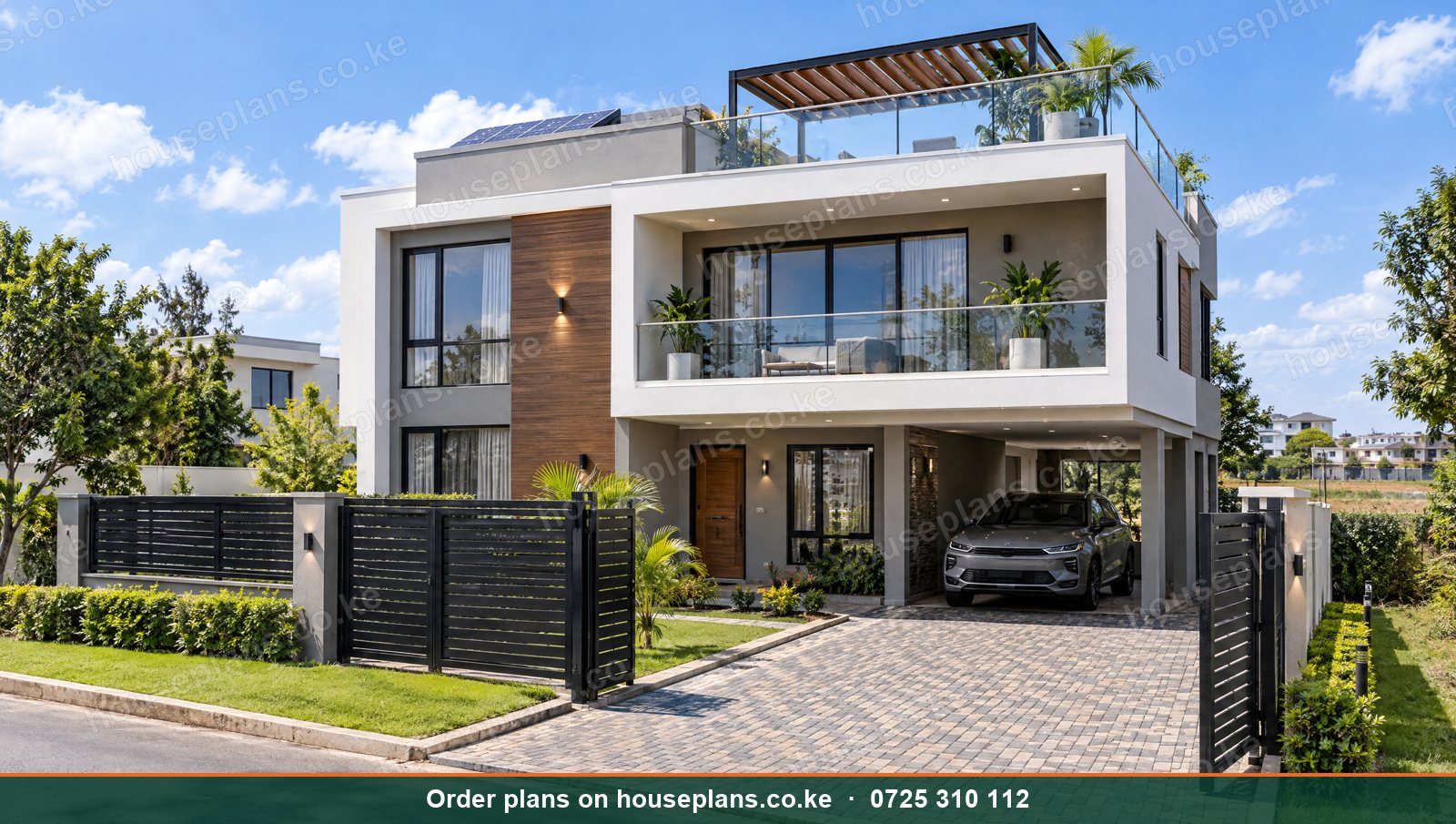
Water tank and solar house plans in Kenya have moved from luxury to necessity. In many neighbourhoods, county water flows only a few days a week. Meanwhile, power outages still interrupt work, cooking and security. Consequently, homeowners who plan water storage, backup power and on-site waste treatment from the start enjoy reliable comfort, while others spend years patching problems.
This guide explains how to plan water and power for your home. We cover underground and elevated tanks, boreholes, pump rooms, rainwater harvesting, septic tanks, soak pits, biodigesters and sewer connections. Additionally, we cover solar water heaters, solar power, inverters, batteries, generators, three-phase power, earthing and lightning protection. Each section includes practical sizes and 2026 guide costs.
Talk to an architect today
Call 0725 310 112 or chat with us on WhatsApp. Send your plot size, county and the number of bedrooms, and we will reply with a quote the same day.
Why Utilities Must Be Planned Early
Utilities are hard to add later. For example, an underground tank needs excavation near the house, which is difficult once paving and gardens exist. Similarly, solar cabling, inverter rooms and generator housing need space and conduits. Therefore, the best time to plan them is during design.
Moreover, utilities affect the structure. Elevated water tanks are heavy, so they need engineered towers or reinforced roof slabs. Septic tanks and soak pits need safe distances from boreholes and boundaries. Consequently, the architect and engineer must coordinate everything.
Water Storage
How Much Water Do You Need?
A typical Kenyan household uses roughly 100 to 150 litres per person per day. Therefore, a family of six uses about 600 to 900 litres daily. To cover a week without county water, you need about 5,000 to 7,000 litres. Many families store more, especially where supply is unreliable.
Underground Tanks
Underground tanks store large volumes without taking up garden space. They keep water cool and protected from sunlight, which limits algae. Most are reinforced concrete or masonry, designed by an engineer. Typical sizes range from 10,000 to 50,000 litres for homes.
Elevated Tanks and Towers
An elevated tank provides gravity pressure for showers and taps. It may sit on a steel stand, a concrete tower or the roof slab. For instance, a 2,000 to 5,000 litre tank on a tower is common. Pressed steel tanks suit larger compounds and apartments.
Pump Rooms
A pump lifts water from the underground tank to the elevated tank. Alternatively, a booster pump supplies pressure directly. Therefore, plan a small pump room or housing with ventilation, drainage and a dedicated power supply.
Rainwater Harvesting
Rainwater harvesting turns your roof into a water source. For example, a 150 m² roof in an area with 800 mm annual rainfall can collect about 100,000 litres per year. That is a large share of a family's needs.
A good system includes gutters, downpipes, a first-flush diverter that discards the dirty first rain, filters and a storage tank. Additionally, an overflow route sends excess water to a soak pit or garden. Flat concrete roofs and iron sheet roofs both work well. Read about eco-friendly house plans in Kenya.
Boreholes
Many homeowners drill boreholes, especially in Karen, Ngong, Kitengela, Athi River, Syokimau, Kiambu and Nakuru. A borehole provides independence from county supply. However, it needs a hydrogeological survey, permits from the Water Resources Authority and sometimes county approval. Moreover, borehole water may be hard, salty or high in fluoride. Therefore, water testing and treatment are essential.
Boreholes need a pump house, a control panel and storage tanks. In gated estates, one shared borehole often serves all homes.
Septic Tanks, Soak Pits and Sewers
Sewer Connections
Where a public sewer exists, homes connect to it through manholes and inspection chambers. This is common in central Nairobi, Mombasa, Nakuru, Kisumu and other urban centres.
Septic Tanks
Where there is no sewer, a septic tank treats wastewater. It separates solids, which settle and break down, from liquid, which flows to a soak pit or drainage field. Sizes depend on the number of users.
Soak Pits and Drainage Fields
Soak pits let treated effluent soak into the ground. They must sit at safe distances from boreholes, wells and buildings. Moreover, soil type matters. Black cotton soil drains poorly, so larger fields or alternative systems may be needed.
Biodigesters
Biodigester septic systems use bacteria to break down waste more completely. Consequently, they need emptying less often and produce cleaner effluent. They are increasingly popular in Kiambu, Kajiado and Machakos.
Greywater Systems
Greywater from showers and washing can be filtered and reused for gardens or toilet flushing. As a result, water use drops significantly.
Water Pressure and Pumps
Weak showers are a common complaint. Therefore, pressure deserves planning. A gravity tank needs height: every metre of height gives roughly 0.1 bar of pressure. Consequently, a tank on a 6 m tower gives modest pressure on the ground floor but little upstairs in a maisonette. In that case, a booster pump with a pressure vessel delivers steady pressure to every tap. Variable-speed pumps run quietly and save power.
Power Supply Options
Single-Phase and Three-Phase Power
Most homes use single-phase power from Kenya Power. However, large homes with many air conditioners, pumps, electric cookers or workshops may need three-phase supply. Similarly, apartments and commercial buildings usually need three-phase power. Therefore, discuss your loads with the electrical designer early. Conversion from single-phase to three-phase later is possible but costs more.
Solar Water Heaters
Solar water heaters are the simplest power-saving feature. They cut electricity bills sharply, because water heating is often the largest household load. Moreover, Kenyan regulations encourage them on larger homes. A 200 to 300 litre system suits most families.
Solar Power Systems
Solar systems come in three types. Grid-tied systems reduce bills during the day. Hybrid systems add batteries for backup during outages. Off-grid systems supply all power without Kenya Power. Consequently, hybrid systems are the most popular in Nairobi, Kiambu and Kajiado, while off-grid systems suit remote farms and lodges.
Battery and Inverter Rooms
Batteries and inverters need a cool, ventilated, secure space. Therefore, we plan a small inverter room, often near the garage or the DSQ. Moreover, cable routes from the roof panels are planned in the electrical drawings.
Backup Generators
Generators remain common for larger homes, apartments and businesses. They need a ventilated, sound-insulated shed away from bedrooms, an exhaust route and a fuel store. Additionally, an automatic transfer switch (ATS) switches between grid and generator power safely.
Earthing and Lightning Protection
Every home needs proper earthing. It protects people and appliances from electrical faults. Moreover, earthing pits must be tested and documented.
Lightning protection is vital in high-risk areas. For example, Kisii, Kakamega, Nyamira and Vihiga have some of the highest lightning activity in the world. Therefore, taller buildings, schools and churches there need lightning arresters, down conductors and earth mats. Read about house plans in Kisumu and Western Kenya.
Utility Planning by Region
| Region | Main utility priorities |
|---|---|
| Nairobi Metropolitan | Large storage, booster pumps, hybrid solar, septic or biodigester |
| Coast | Water storage, solar water heaters, corrosion-resistant equipment |
| Central highlands | Rainwater harvesting, solar water heating, backup heating |
| Rift Valley | Boreholes, rainwater tanks, solar on farms |
| Western and Nyanza | Lightning protection, storm drainage, rainwater tanks |
| North and East | Maximum water storage, off-grid solar, water treatment |
Utility Costs in Kenya
Typical 2026 guide costs are:
| Item | Approximate cost |
|---|---|
| 10,000 L underground concrete tank | KSh 150,000 – 350,000 |
| 5,000 L plastic tank on steel stand | KSh 60,000 – 150,000 |
| Booster pump and controls | KSh 35,000 – 120,000 |
| Septic tank and soak pit | KSh 150,000 – 400,000 |
| Biodigester septic | KSh 120,000 – 300,000 |
| Borehole (survey, drilling, pump) | KSh 600,000 – 2.5M+ |
| Solar water heater, 200–300 L | KSh 90,000 – 220,000 |
| Hybrid solar, 3–5 kW | KSh 450,000 – 1.2M |
| Standby generator with ATS | KSh 250,000 – 1.5M |
Costs vary by location, depth, soil and equipment. A bill of quantities gives exact figures. Use our building cost calculator for your home.
Utilities for Apartments and Estates
Apartment blocks need bigger systems. For instance, a block of 12 units needs large underground storage, a pump room, an elevated or rooftop tank, a generator and often a borehole. Additionally, individual meters for water and power simplify billing. Similarly, gated estates may share a borehole, a treatment plant and solar street lighting. Our Umoja apartments and Kasarani apartments include utility rooms. Read about apartment and rental building plans.
Water and Power Across Kenya
In Kitengela, Athi River and Syokimau, water supply is often irregular, so large tanks and boreholes are common. In Ruiru and Juja, rapid growth strains supply, so storage is essential. On the coast, in Nyali and Diani, solar water heaters and corrosion-resistant pumps work best. Upcountry, in Nyeri and Kakamega, rainwater harvesting is highly effective because rainfall is generous.
Common Utility Mistakes
Tanks Too Small
Undersized tanks run dry quickly. Therefore, size storage for at least several days of use.
Septic Tank Too Close to the Borehole
This can contaminate drinking water. Always follow safe separation distances.
No Space for the Inverter or Generator
Equipment squeezed into a store overheats. Plan a proper, ventilated room.
Forgetting Overflow Routes
Overflowing tanks flood foundations. Every tank needs a safe overflow.
Ignoring Water Quality
Borehole water may need softening or treatment. Test before use.
Plumbing Layout Basics
Good plumbing starts with a simple layout. For instance, grouping kitchens, bathrooms and laundries reduces pipe runs. Consequently, materials cost less and water pressure stays stronger. In maisonettes, stacking bathrooms above each other shortens drainage. Moreover, accessible inspection chambers make blockages easy to clear.
Pipe materials matter too. PPR pipes are now standard for hot and cold water, because they resist corrosion and scale. Meanwhile, uPVC pipes carry waste and stormwater. Our free plumbing drawings show every pipe size, valve, chamber and fall.
Water Treatment and Quality
Stored water must stay safe. Therefore, tanks need tight lids, screened vents and regular cleaning, ideally once or twice a year. Additionally, a sediment filter after the pump protects fittings, while a carbon filter improves taste and smell. For drinking water, many families add a UV purifier or a reverse osmosis unit in the kitchen.
Borehole water often needs more treatment. For example, water in parts of Kajiado, Machakos and the Rift Valley can contain high fluoride. Similarly, coastal boreholes may be salty. Consequently, test the water at a certified laboratory before choosing a treatment system. Hard water also leaves scale on taps, showers and solar heaters, so a softener protects your investment.
Hot Water Systems
Hot water is a daily comfort. Besides solar water heaters, options include electric instant showers, electric storage cylinders and heat pumps. Instant showers are cheap but use a lot of power at once. Meanwhile, heat pumps are very efficient and suit cooler areas such as Limuru, Nyeri and Nanyuki, where solar heating struggles on cloudy days.
The best homes combine systems. For instance, a solar water heater with an electric backup element covers sunny and cloudy days. Additionally, short pipe runs from the heater to bathrooms reduce waiting time and wasted water. Therefore, we place hot water cylinders close to the main bathrooms.
Stormwater Drainage
Rain does not only fill tanks. It also floods compounds if drainage is poor. Consequently, every plot needs a stormwater plan. Roof water goes to tanks first, then overflows to soak pits or the road drain. Meanwhile, paved areas slope to channel drains. In heavy-rain areas such as Kisii, Kakamega and Kericho, generous drains and culverts are essential.
Black cotton soil makes drainage harder. Water ponds on the surface and swells the soil, which can crack walls. Therefore, in Kitengela, Athi River and Syokimau, we keep water well away from foundations. Read about garage, carport and driveway designs for driveway drainage tips.
Smart Metering and Monitoring
Modern systems let you monitor water and power from your phone. For example, tank level sensors show how much water remains. Similarly, solar inverters report generation, battery charge and consumption. As a result, you spot leaks, faults and waste quickly. These tools are especially useful for landlords and diaspora homeowners.
Utilities for Upcountry and Farm Homes
Rural homes often lack piped water and reliable power. Therefore, they depend on rainwater, boreholes, water pans and solar. A farmhouse may combine a large roof catchment, an underground tank, a borehole for livestock and a solar pump. Read about farm house designs and farm structures and simple house designs in rural Kenya.
Our Services for Water and Power Planning in Kenya
Water Storage Design
We size and position underground tanks, elevated tanks and pump rooms. Consequently, your home has reliable water all week.
Our engineers design tank structures and towers to carry the heavy loads safely.
Rainwater Harvesting Design
We design gutters, filters, first-flush systems and storage. As a result, your roof becomes a water source.
Septic, Biodigester and Sewer Design
We design septic tanks, biodigesters, soak pits and sewer connections that meet county and NEMA rules.
Moreover, we check soil drainage, so effluent disposal works on your plot.
Solar and Backup Power Planning
We plan solar water heaters, solar panels, inverter rooms and generator housing. Therefore, your home keeps running during outages.
Electrical Design
Free electrical drawings include circuits, earthing, ATS connections and three-phase supply where needed.
Consequently, electricians wire your home safely and correctly the first time.
Lightning Protection Layouts
We design lightning protection for homes, schools, churches and tall buildings in high-risk areas.
This is especially important in Kisii, Nyamira, Kakamega and Vihiga.
County Approvals
We submit full plans, including drainage and utilities, in all 47 counties.
Talk to an architect today
Call 0725 310 112 or chat with us on WhatsApp. Send your plot size, county and the number of bedrooms, and we will reply with a quote the same day.
Plan Your Utilities With Us
Call or WhatsApp 0725 310 112, or email info@houseplans.co.ke. Our office is in Nairobi, and we serve every county, from Nairobi and Kiambu to Kajiado, Mombasa, Nakuru and Kisii.
Read about structural drawings and bills of quantities, browse modern house plans, or order your plan.
Frequently asked questions
How big should my water tank be?+
Store enough for several days. A family of six uses about 600 to 900 litres a day, so 5,000 to 10,000 litres covers about a week.
Do I need a septic tank in Kenya?+
Yes, if there is no public sewer. A septic tank or biodigester with a soak pit treats wastewater on site.
Is a biodigester better than a septic tank?+
Often, yes. It breaks down waste more completely and needs emptying less often.
What size solar system does a home need?+
A typical family home uses a 3–5 kW hybrid system for backup and bill savings. The exact size depends on your loads.
Do I need permission to drill a borehole?+
Yes. Boreholes need a hydrogeological survey and permits from the Water Resources Authority, and sometimes county approval.
Related searches
- Water tank and solar house plans in Kenya
- Underground water tank maisonette plan Kenya
- Underground water tank bungalow plan Kenya
- House plans with underground water tank provision Kenya
- House plans with overhead water tank tower Kenya
- Solar water heater panel roof placement plans Kenya
- Overhead pressed steel water tank tower plans Kenya
- Water tank tower structural stability plans Kenya
- Water house plans Kenya
- Solar house plans Kenya
- Septic house plans Kenya
- Power house plans Kenya
- Utilities house plans Kenya
- Eco house plans Kenya
- 3 bedroom house plans in Kenya
- 3 bedroom house design in Kenya
- Low cost simple 3 bedroom house plans in Kenya