

Eco-Friendly House Plans in Kenya: Green, Off-Grid, Passive Solar and Sustainable Home Designs
By the HousePlans Kenya design team · 4 October 2026 · 11 min read
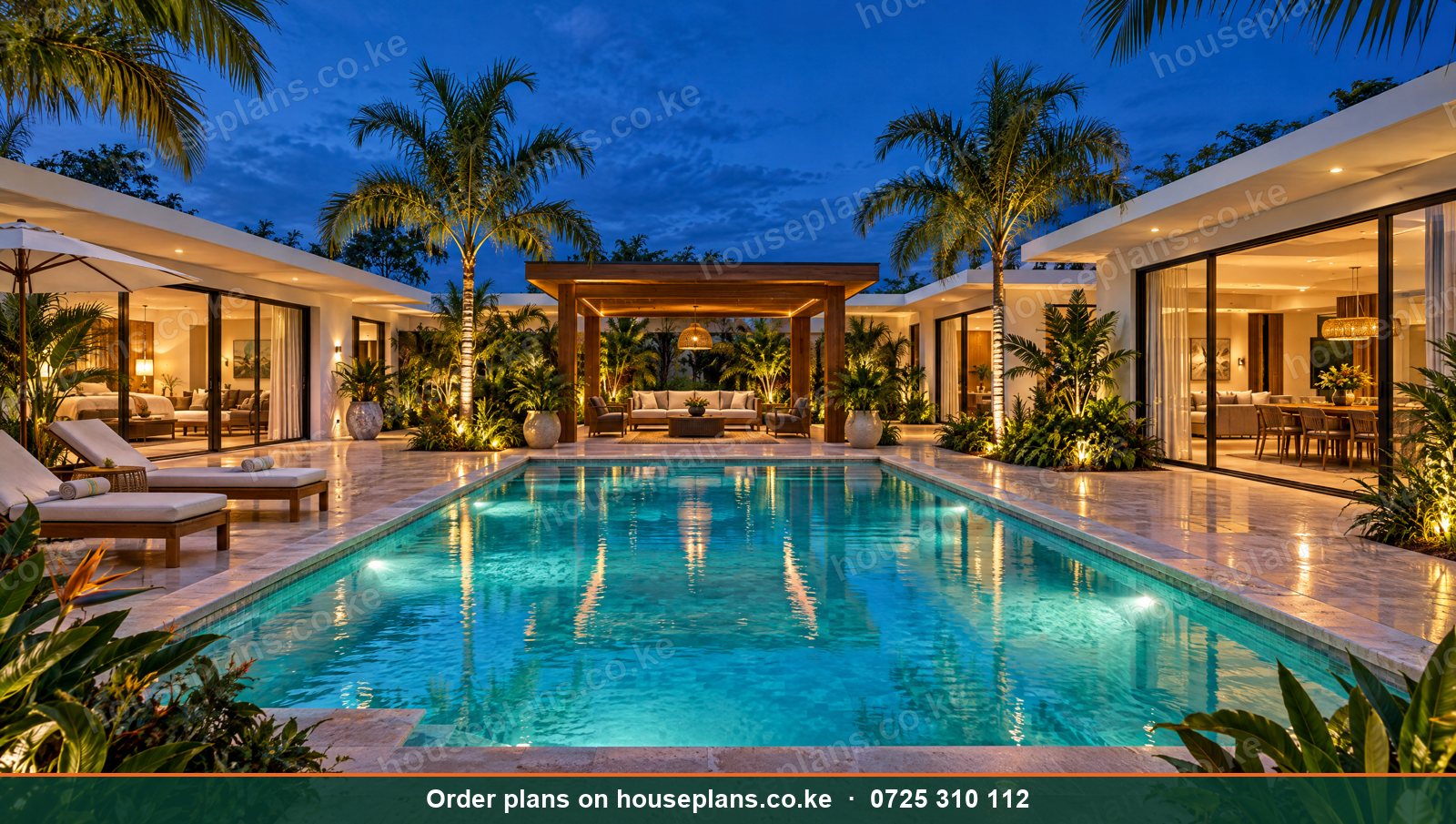
Eco-friendly house plans in Kenya are no longer just for environmentalists. Rising electricity tariffs, water rationing and fuel prices have made green design a smart financial choice. A well-designed eco home stays cool without air conditioning, collects its own water, makes its own power and treats its own waste. As a result, monthly bills fall sharply, and the home keeps working when the grid or the county water supply fails.
This guide explains how to design a green, sustainable home in Kenya. We cover passive solar design, natural cooling, solar power, rainwater harvesting, greywater recycling, biodigesters, low-carbon materials and green certification. Additionally, we show how these ideas apply in Nairobi, the coast, the highlands and the dry north.
Talk to an architect today
Call 0725 310 112 or chat with us on WhatsApp. Send your plot size, county and the number of bedrooms, and we will reply with a quote the same day.
What Makes a House Eco-Friendly?
An eco-friendly home uses less energy, less water and fewer resources, both during construction and over its life. Moreover, it creates a healthy indoor environment. In practice, this comes down to a few principles.
First, design with the climate, so the house stays comfortable naturally. Next, generate clean energy on site. Then, capture and reuse water. Finally, choose materials with low environmental impact. Each principle saves money too.
Passive Solar Design in Kenya
Orientation
Kenya sits on the equator. Therefore, the sun passes almost overhead, rising in the east and setting in the west. East and west walls get the most heat. Consequently, the best eco homes are long and narrow on an east-west axis, with main windows facing north and south.
Shading
Roof overhangs, verandas and louvres block high sun while letting in daylight. For example, a 900 mm overhang shades a north or south window for most of the day. Meanwhile, west-facing walls benefit from trees, pergolas or a garage as a buffer.
Thermal Mass
Heavy materials such as stone, brick and concrete absorb heat by day and release it at night. As a result, they smooth out temperature swings. This suits highland towns such as Nairobi, Nyeri and Eldoret, where days are warm and nights are cool.
Insulation
Roof insulation is the single most effective upgrade in most Kenyan homes. In fact, most heat enters through the roof. Therefore, insulation under iron sheets or on concrete slabs keeps interiors far cooler.
Natural Cooling and Ventilation
Cross-Ventilation
Windows on opposite sides of a room let breezes flow through. Consequently, rooms cool down without fans. This is essential on the coast and around Lake Victoria.
Stack Ventilation
Warm air rises. Therefore, high-level windows, clerestories, roof vents and double-volume spaces let hot air escape. Meanwhile, cooler air enters low down.
Courtyards
Courtyards create shaded outdoor rooms and pull air through the house. Swahili homes in Lamu have used this idea for centuries. Our Savanna courtyard bungalow applies the same principle to a modern home.
Light-Coloured Roofs
Reflective roofs absorb less heat. For example, a white or light grey roof can lower roof temperatures dramatically compared with a dark one.
Solar Power for Kenyan Homes
Solar Water Heating
Solar water heaters are the easiest green upgrade. Moreover, Kenyan regulations encourage them on larger homes. A good system covers most hot water needs in sunny areas such as Machakos, Kitui, Nakuru and the coast.
Grid-Tied and Hybrid Solar
Grid-tied systems reduce bills by using solar power during the day. Hybrid systems add batteries, so lights, Wi-Fi and security keep running during outages. In Nairobi, Kiambu and Kajiado, hybrid systems are increasingly popular.
Off-Grid Solar
Off-grid systems supply all power from solar panels and batteries. They suit remote farms, lodges and homes in areas such as Laikipia, Samburu, Narok and Kajiado, where grid connection is far or expensive.
Designing for Solar
Good design makes solar easier. Therefore, we plan a roof area facing north or with a low slope for panels, a dedicated battery and inverter room, and cable routes. Additionally, energy-efficient lighting and appliances reduce the size of the system you need.
Water-Wise Design
Rainwater Harvesting
Kenya receives two rainy seasons in most regions. Consequently, a roof can collect a surprising amount of water. For example, a 150 m² roof in an area with 900 mm of annual rain can collect over 100,000 litres a year. We design gutters, first-flush diverters, filters and underground or elevated tanks.
Greywater Recycling
Greywater from showers, basins and washing machines can water gardens and flush toilets. As a result, household water use falls significantly. Simple systems use filters and a small tank. Meanwhile, larger systems include treatment units.
Water-Efficient Fittings
Low-flow showers, dual-flush toilets and aerated taps cut water use without reducing comfort. Moreover, they cost little extra.
Boreholes
In areas such as Karen, Ngong, Kitengela and Athi River, many homeowners drill boreholes. However, borehole water may be hard or salty. Therefore, we plan treatment and storage.
Waste Treatment: Biodigesters and Septic Systems
In areas without sewers, every home needs on-site waste treatment. Biodigester septic systems break down waste more completely than traditional septic tanks. Consequently, they need emptying less often and produce cleaner effluent.
Larger biogas digesters can turn kitchen waste and animal dung into cooking gas. They suit farms in Kiambu, Nyeri, Meru and Nakuru, especially with dairy cows. Read our guide to farm house designs and farm structures.
Low-Carbon Building Materials
Local Materials
Using local stone, brick or earth reduces transport emissions. For instance, machine-cut stone in Juja or burnt brick in Kakamega travels only a short distance.
Earth Blocks and Rammed Earth
Interlocking soil blocks and rammed earth use little cement. Therefore, they have a much lower carbon footprint than concrete blocks. Read about alternative building technologies in Kenya.
Timber and Bamboo
Plantation timber stores carbon. Similarly, bamboo grows fast and renews quickly. See our guide to timber and wooden house designs.
Efficient Structural Design
Optimised structures use less concrete and steel. For example, hollow pot slabs reduce concrete volume. Our engineers design lean, safe structures.
Climate-Responsive Design by Region
| Region | Key eco strategies |
|---|---|
| Nairobi Metropolitan | Thermal mass, roof insulation, hybrid solar, rainwater storage |
| Coast | Cross-ventilation, shading, light roofs, corrosion-resistant solar |
| Central highlands | Insulation, sun-facing living rooms, rainwater harvesting |
| Rift Valley | Mixed: insulation upcountry, shading on the valley floor |
| Western and Nyanza | Big overhangs, storm drainage, rainwater harvesting |
| North and East | Courtyards, thick walls, off-grid solar, water storage |
Eco Homes Across Kenya
Nairobi and Its Satellite Towns
Water rationing and power outages are common in parts of Nairobi, Kiambu and Machakos. Consequently, eco features pay off fast here. For example, homes in Ruiru, Syokimau and Kitengela benefit greatly from rainwater tanks and hybrid solar. Read our guide to house plans in Nairobi.
The Coast
On the coast, cooling is the main challenge. Therefore, cross-ventilation, deep verandas and reflective roofs come first. In Nyali, Diani and Malindi, a well-ventilated home needs far less air conditioning. Additionally, solar panels must use corrosion-resistant mounts.
The Highlands
In Nyeri, Nanyuki and Eldoret, keeping warm matters most. Consequently, insulation, sun-facing lounges and thermal mass reduce heating needs. Rainfall is also generous, so large rainwater tanks fill quickly.
Arid and Semi-Arid Areas
In Isiolo, Garissa and Kitui, water and heat dominate design. Therefore, homes use courtyards, thick walls, shaded verandas and maximum water storage. Off-grid solar is often the most reliable power source. Read about house plans in Northern and Eastern Kenya.
Healthy Indoor Environments
Eco design is also about health. For instance, good daylight reduces the need for artificial lighting and improves mood. Meanwhile, fresh air prevents damp, mould and stale smells. Low-VOC paints and natural finishes reduce indoor pollution.
Kitchens deserve special attention. Many Kenyan homes still cook with charcoal or firewood, especially upcountry. Consequently, smoke harms health. A well-ventilated kitchen, a chimney or a switch to biogas or LPG greatly improves indoor air. Read about simple house designs in rural Kenya.
Green Landscaping
The garden is part of an eco home. For example, indigenous trees such as croton, Nandi flame and acacia provide shade with little water. Similarly, drought-tolerant plants and mulch reduce watering. Permeable paving lets rain soak into the ground instead of flooding drains.
Food gardens add another benefit. Kitchen gardens, fruit trees and small greenhouses can supply vegetables all year. Moreover, they can be watered with recycled greywater. Every design we produce includes a free landscape plan.
Eco-Friendly Apartments and Commercial Buildings
Green design is not only for houses. In fact, eco features make apartments and offices more profitable. For instance, solar water heating in a rental block in Juja lowers tenants' bills, which helps keep units full. Similarly, rainwater harvesting reduces water costs for landlords. Read our guide to apartment and rental building plans and browse commercial building designs.
Common Mistakes in Eco Home Design
Adding Eco Features Too Late
Solar panels and tanks added after construction cost more. Therefore, plan them in the drawings.
Big West-Facing Windows
Large west windows overheat rooms every afternoon. Instead, place glazing north and south.
Undersized Water Storage
Small tanks overflow in the rains and run dry in the dry season. Consequently, size tanks to your roof and rainfall.
Cheap Batteries
Poor-quality batteries fail early. Choose reputable suppliers with warranties.
The Cost and Payback of Eco Features
Eco features cost more upfront. However, many pay for themselves quickly, often within three to six years. Typical 2026 figures are:
| Feature | Approximate cost | Typical benefit |
|---|---|---|
| Solar water heater (200–300 L) | KSh 90,000 – 220,000 | Large cut in electricity bills |
| Hybrid solar, 3–5 kW | KSh 450,000 – 1.2M | Backup power, lower bills |
| Roof insulation | KSh 600 – 1,500 per m² | Cooler, more comfortable rooms |
| Rainwater harvesting, 10,000 L | KSh 150,000 – 350,000 | Reliable water supply |
| Biodigester septic | KSh 120,000 – 300,000 | Less frequent emptying |
Passive design costs almost nothing extra when planned early. In fact, orientation and shading are free if decided before construction. Use our building cost calculator to estimate your overall budget.
Energy-Efficient Lighting and Appliances
The cheapest energy is the energy you never use. Therefore, every eco home should use LED lighting throughout. LEDs use a fraction of the power of old bulbs and last for years. Additionally, motion sensors on outdoor and security lights cut waste.
Appliances matter too. For instance, an efficient fridge, an induction or gas cooker and an inverter air conditioner use far less power than older models. Consequently, a smaller solar system can run the home. We plan socket positions, circuits and an energy-efficient lighting layout in the electrical drawings.
Retrofitting an Existing Home
You can make an existing home greener. First, add roof insulation and a solar water heater. Next, install rainwater gutters and a tank. Then replace old lighting with LEDs. Finally, consider hybrid solar for backup power. These steps suit older homes in Buruburu, South B, Langata and Thika. We prepare retrofit drawings for larger changes, such as adding a battery room or a greywater system.
Eco Homes and Financing
Green features can strengthen a loan application. For example, lenders increasingly support EDGE-certified homes and solar installations. Moreover, lower running costs leave more income for loan repayments. Read about home loans and SACCO financing on our financing page.
Green Building Certification
Some clients seek green certification for their homes or commercial buildings. For instance, the EDGE certification system is used in Kenya for homes, apartments and offices. It rewards savings in energy, water and embodied energy. Certified buildings may attract green mortgages and higher rents. We design to EDGE principles on request.
Eco-Friendly House Plans for Different Budgets
You do not need a big budget to build green. For example, a simple 2 bedroom bungalow with good orientation, roof insulation, a solar water heater and a rainwater tank is already an eco home. Our Zawadi bungalow and Amani bungalow are compact designs that adapt easily. Meanwhile, larger homes can add hybrid solar, greywater recycling and a biodigester.
Our Services for Eco-Friendly House Plans in Kenya
Climate-Responsive Architectural Design
We design homes that stay comfortable naturally. Orientation, shading and ventilation are planned from the first sketch.
Our architect visits your site, notes the sun path and winds, and designs around them. Site visits cost KSh 5,000 in Nairobi and its environs, and we travel to every county.
We then show the design in 3D renders and a walkthrough video, so you see how light and shade move through the home.
Solar Power Planning
We plan roof areas, inverter rooms and cable routes for solar. Consequently, installation is simple and efficient.
We also size panels and batteries to your actual loads, so you do not overspend.
Rainwater and Greywater Design
We design gutters, tanks, filters and greywater systems. Moreover, we size storage to your roof and rainfall.
For dry areas, we add underground tanks that keep water cool and clean.
Waste Treatment Design
We design biodigester septic systems, soak pits and biogas digesters. Therefore, your home handles waste cleanly.
These systems suit plots without sewer connections across Kiambu, Kajiado, Machakos and upcountry.
Low-Carbon Structural Engineering
Our engineers design efficient foundations and slabs. As a result, you use less concrete and steel.
Where suitable, we specify hollow pot slabs, local stone and earth blocks to cut embodied carbon further.
MEP Drawings
Plumbing and electrical drawings come free with every design. Additionally, they integrate solar, rainwater and greywater systems.
We also show LED lighting layouts and efficient circuits, so the solar system stays small and affordable.
County Approvals
We prepare and submit plans across all 47 counties, then follow up until approval.
Talk to an architect today
Call 0725 310 112 or chat with us on WhatsApp. Send your plot size, county and the number of bedrooms, and we will reply with a quote the same day.
Build an Eco Home With Us
Call or WhatsApp 0725 310 112, or email info@houseplans.co.ke. Our office is in Nairobi, and we design eco homes across Kenya, from Kiambu and Kajiado to Laikipia, Kilifi, Kisumu and Turkana.
Browse modern house plans, read about modern house designs, or order your plan.
Frequently asked questions
What is an eco-friendly house?+
It is a home designed to use less energy, water and resources, while staying comfortable and healthy. It often uses solar power and rainwater harvesting.
Are eco-friendly houses more expensive in Kenya?+
Some features cost more upfront, but many pay back through lower bills. Passive design costs almost nothing when planned early.
Can a house in Kenya be fully off-grid?+
Yes. With solar power, batteries, rainwater harvesting and on-site waste treatment, homes can run fully off-grid.
Which direction should a house face in Kenya?+
Main windows should face north and south. East and west walls should be shaded or have fewer windows.
What is the cheapest eco upgrade?+
Roof insulation and a solar water heater give the biggest savings for the lowest cost in most Kenyan homes. A rainwater tank is a close third.
Related searches
- Eco-friendly house plans in Kenya
- Eco friendly green house plans Kenya
- Eco house plans Kenya
- Green building house plans Kenya
- Solar house plans Kenya
- Water house plans Kenya
- Sustainable house plans Kenya
- Off-grid house plans Kenya
- 3 bedroom house plans in Kenya
- 3 bedroom house design in Kenya
- Low cost simple 3 bedroom house plans in Kenya
- House design Kenya
- House plans Kenya
- Best house designs in Kenya
- Cheap house designs in Kenya
- 2 bedroom house design in Kenya
- 2 bedroom house designs Kenya