

Simple House Designs in Rural Kenya: Affordable Upcountry and Village Home Plans
By the HousePlans Kenya design team · 1 October 2026 · 11 min read
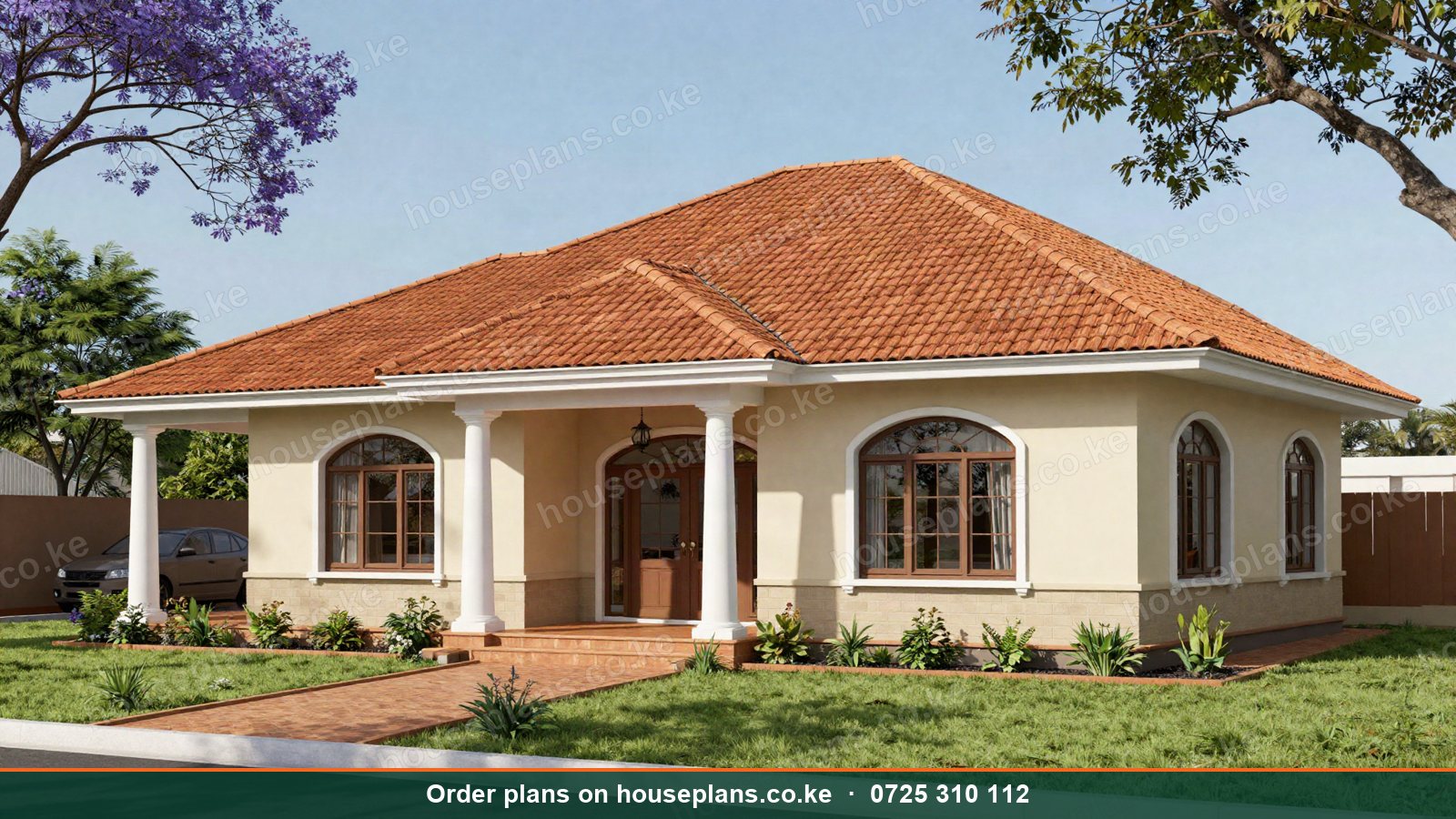
Simple house designs in rural Kenya let families build a comfortable home on ancestral land without overspending. Many Kenyans dream of a proper house "shagz" (upcountry), whether for retirement, for ageing parents or as a base for holidays. However, rural building has its own challenges. Water, power, transport and skilled labour all differ from the city.
This guide explains how to design and build a simple, beautiful and affordable rural home in Kenya. We cover the best upcountry house plans, local materials, water and solar, and costs. Additionally, we look at what works in Central Kenya, Western Kenya, Nyanza, Ukambani, the Rift Valley and the Coast.
Talk to an architect today
Call 0725 310 112 or chat with us on WhatsApp. Send your plot size, county and the number of bedrooms, and we will reply with a quote the same day.
Why Rural Homes Need a Different Design
A rural home is not just a smaller version of a city house. In fact, the needs are quite different.
First, plots are bigger. As a result, you can spread out on one level and leave room for a kitchen garden, livestock and future homes for children. Second, utilities are less reliable. Therefore, rural homes need their own water, power and waste systems.
Third, rural life happens outdoors. Consequently, verandas, outdoor kitchens and covered yards matter more than in town. Fourth, families gather in large numbers for funerals, weddings and holidays. Thus, rural homes need flexible space for guests.
Finally, transport costs are high in remote areas. For instance, hauling cement and steel to a hilly plot in Kisii or Murang'a can add significantly to the bill. Therefore, using local materials and simple designs saves real money.
Features of a Good Rural House Plan
A Simple, Compact Shape
A rectangle or a gentle L-shape keeps costs low and makes construction easy for local fundis. Moreover, a simple shape is easier to extend later.
A Big Veranda
The veranda is the living room of a rural home. It shelters visitors, gives shade in the afternoon and provides a dry space during rain. Furthermore, it is where elders sit and children play.
An Outdoor or Back Kitchen
Many rural families still cook with firewood or charcoal for some meals. Therefore, a separate back kitchen or an outdoor cooking area keeps smoke out of the house. A modern indoor kitchen can serve gas and electric cooking.
A Store
Rural homes need storage for harvests, tools, animal feed and bulk food. Consequently, we include a store with good ventilation and secure doors.
Guest Space
A spare bedroom or a separate guest house serves visiting relatives. Alternatively, a large living room can host family gatherings.
Room to Grow
Rural plots often host several generations. Therefore, we plan the site so that future houses, a DSQ or a grain store can fit without crowding.
Popular Simple House Designs for Rural Kenya
Simple 2 Bedroom Rural Homes
A 2 bedroom house suits retirees and small families. Our Zawadi bungalow is perfect for rural plots. At 72 m², it has two bedrooms, a living and dining room, a pantry and a water tank stand. It uses a simple hip roof to keep costs down.
Simple 3 Bedroom Rural Homes
A 3 bedroom bungalow suits most rural families. For example, the Neema bungalow offers a classic hip roof, a wide veranda and a separate laundry yard. A simplified version works beautifully on family land.
Large Rural Homesteads
Extended families need more space. The Boma homestead is a six bedroom bungalow designed for multi-generational living on large plots. Similarly, the Malaika bungalow offers five bedrooms with a guest wing.
Stone Farmhouses
In stone-rich areas such as Machakos, Nyeri and Nanyuki, a stone farmhouse looks beautiful and lasts for generations. The Jabali bungalow is a 4 bedroom stone design with a gable roof.
Browse more affordable options on our low cost house plans and bungalow house plans pages.
Local Building Materials for Rural Homes
Using local materials cuts costs and suits the climate. Here are the best options by region.
Burnt Clay Bricks
Burnt bricks are common in Western Kenya, Nyanza and parts of Central Kenya. They are cheap, strong and attractive. Moreover, a fair-faced brick wall needs no plaster.
Natural Stone
Machine-cut and hand-dressed stone is widely available in Machakos, Nairobi's environs, Nyeri and Meru. It is durable and gives a timeless look.
Interlocking Stabilised Soil Blocks
ISSBs use local soil mixed with a little cement. They suit Ukambani, Laikipia and parts of the Rift Valley. They need less mortar and little or no plaster. However, they need a skilled crew and good soil.
Timber
Timber homes suit cold, forested areas such as Nyandarua, Molo and Elgeyo-Marakwet. They are quick to build and warm. Nevertheless, timber needs treatment against termites and rot.
Concrete Blocks
Concrete blocks work anywhere. They are useful where stone and good bricks are scarce.
Talk to an architect today
Call 0725 310 112 or chat with us on WhatsApp. Send your plot size, county and the number of bedrooms, and we will reply with a quote the same day.
Water Solutions for Rural Homes
Water is the biggest challenge in many rural areas. Therefore, every rural design we create plans for water from the start.
Rainwater Harvesting
A 100 m² roof can collect tens of thousands of litres a year in most of Kenya. Consequently, gutters and large tanks can meet much of a family's needs. In Kakamega, Kisii and Kericho, rainfall is high, so harvesting is very effective.
Boreholes and Shallow Wells
In drier areas such as Machakos, Kitui and Makueni, a borehole may be needed. We plan its position, the pump house and the tank tower.
Water Storage
Elevated tanks give pressure without pumps. Alternatively, an underground tank stores large volumes cheaply. We design both.
Power Solutions for Rural Homes
Power cuts are common upcountry. As a result, solar power makes sense. A solar water heater cuts bills immediately. Similarly, a solar system with batteries keeps lights, phones and TV running during outages.
Moreover, we orient the roof to carry solar panels. Where the grid is far away, we design a full off-grid system.
Sanitation for Rural Homes
Most rural homes are far from sewer lines. Therefore, they need a septic tank and soak pit, or a bio-digester. We size these for your household and soil type. Additionally, we place them safely away from wells and boreholes.
How Much Does a Simple Rural House Cost in Kenya?
Here are 2026 guide costs for simple rural homes with basic finishes of about KSh 32,000 per square metre:
| Design | Size | Estimated cost |
|---|---|---|
| 2 bedroom (Zawadi) | 72 m² | KSh 2.1M – 2.6M |
| 3 bedroom simple bungalow | 110 m² | KSh 3.2M – 3.9M |
| 4 bedroom bungalow | 160 m² | KSh 4.6M – 5.7M |
Local materials and owner supervision can reduce these figures. However, remote sites with high transport costs may cost more. Use our building cost calculator for your own estimate.
Our bungalow drawings cost KSh 25,000 to 36,700, with free 3D renders, interior design, plumbing and electrical drawings, and a landscape plan. See our pricing page.
Building Upcountry From the Diaspora or From Nairobi
Many rural homes are built by owners who live far away. For example, a family in Nairobi or the UK builds a home in Kakamega or Nyeri. This creates special risks.
First, use approved plans and a BQ. These give your contractor clear instructions and let you track costs. Second, hire a trusted supervisor or project manager. Third, pay in stages tied to progress, not in advance. Finally, ask for photos and videos at every stage.
We support diaspora and Nairobi-based clients throughout. Our architect visits the plot, and we share drawings and renders on WhatsApp. Additionally, our financing page explains diaspora loans from Kenyan banks.
Simple Rural House Designs by Region
Central Kenya
In Nyeri, Murang'a, Kirinyaga and Embu, the climate is cool and wet. Therefore, stone walls, tiled or mabati roofs with ceilings, and a fireplace work well. Many homes face Mt Kenya or the Aberdares.
Western Kenya
In Kakamega, Bungoma, Vihiga and Busia, rainfall is high. Consequently, wide roof overhangs, good gutters and raised floors protect the house. Burnt bricks keep costs low.
Nyanza
In Kisii and Nyamira, steep plots need stepped foundations and lightning protection. Meanwhile, in Siaya, Homa Bay and Migori, heat calls for shading and insect screens.
Ukambani
In Machakos, Makueni and Kitui, water is scarce. Therefore, rainwater harvesting, large tanks and soil block walls make sense.
The Rift Valley
In Nandi, Bomet, Kericho and Trans Nzoia, farms are large and the climate is cool. Spacious bungalows with fireplaces suit farming families.
The Coast
Rural homes in Kilifi, Kwale and Taita-Taveta need airflow, high ceilings and termite protection.
Designing for Family Gatherings
Rural homes host big events. For example, a graduation, a dowry ceremony or a funeral can bring hundreds of guests. Therefore, the design should allow the compound to host them.
A wide, level open area near the house works well for tents. Meanwhile, a large veranda gives elders a shaded place to sit. Additionally, an outdoor kitchen with space for large sufurias makes catering easier. Finally, an extra outdoor toilet block helps on busy days. These features cost little but make a big difference when the family gathers.
Security in Rural Homes
Rural homes are often empty for long periods. Consequently, security matters. Strong doors, window grilles and a lockable store protect your property. A live fence or a simple perimeter wall marks the boundary. Moreover, solar security lights deter intruders at night. If a caretaker lives on the plot, a small caretaker's house near the gate is a wise addition.
Phasing a Rural Home
Many rural homes are built over several years. In fact, this is often the wisest approach. First, build a small house or DSQ to live in during construction. Next, build the main house shell and roof. Then finish the interiors as funds allow. Our site plans show every phase, so each new building fits the overall layout.
Finding Fundis and Contractors Upcountry
Skilled builders can be hard to find in remote areas. However, every county has experienced local fundis. The key is to give them clear drawings and supervise their work.
First, ask neighbours and the local church for recommendations. Next, visit homes the fundi has built. Then agree a written contract with a payment schedule tied to stages. Additionally, buy materials yourself where possible, so you control quality. Our detailed drawings and BQ make it much easier for a local team to build correctly.
Keeping a Rural Home Warm or Cool
Comfort depends on the local climate. In cold highland areas such as Nyandarua, Molo, Limuru and the slopes of Mt Kenya, nights can drop close to freezing. Therefore, we add ceilings with insulation, well-sealed windows and a fireplace or wood stove. Meanwhile, living rooms face the morning sun.
In hot lowland areas such as Kitui, Homa Bay, Kilifi and Garissa, the opposite applies. Consequently, we use high ceilings, cross-ventilation, deep verandas and light-coloured roofs. Trees planted on the west side also shade the house from the harsh afternoon sun.
Kitchen Gardens and Livestock
Rural plots support a way of life. For example, a kitchen garden near the back door supplies sukuma wiki, onions and herbs. Similarly, a cow shed, a goat pen or a poultry house adds food and income. However, animal structures should sit downwind of the house and away from water sources. Consequently, we mark them on the site plan, together with the compost area and grain store. As a result, the whole homestead works smoothly from day one.
Common Mistakes in Rural Construction
No Plans at All
Many rural homes are built by fundis without drawings. As a result, walls crack, roofs leak and costs balloon. A proper plan prevents this.
Ignoring Drainage
Heavy rain can flood a poorly sited house. Therefore, we plan site drainage, raised floors and cut-off drains.
Using Untreated Timber
Termites destroy untreated timber quickly in warm areas. Consequently, treat all timber or use steel trusses.
Building Too Big
A large rural house that sits empty most of the year wastes money. Build for real needs, and plan to expand.
Our Services for Simple House Designs in Rural Kenya
Rural Home Architectural Design
We design simple, affordable homes for rural plots in every county. Our architect visits your land to study the slope, soil, water and access.
Then we design a home that suits your family, your budget and local materials.
Ready Rural House Plans
Prefer a proven design? Choose from plans such as the Zawadi, Neema or Boma.
We adapt them to your plot and local conditions. Consequently, you save time and money.
Structural Design for Rural Sites
Rural sites can have tricky soils and slopes. Our engineers design safe foundations, walls and roofs for your conditions.
This includes black cotton soil in Ukambani and steep slopes in Kisii and Murang'a.
Water, Solar and Sanitation Planning
Every rural design includes plumbing, drainage and electrical layouts. Moreover, we plan rainwater harvesting, tanks, boreholes, solar and septic systems.
Bill of Quantities
A BQ helps you buy the right materials and control costs from afar. It also helps if you need a loan.
County Approval
Rural homes still need county approval. We prepare and submit your plans. Read our approval guide for details.
3D Renders and Landscape Design
Every design includes 3D renders, a walkthrough video and a landscape plan. Therefore, you can share the vision with your family before building.
Talk to an architect today
Call 0725 310 112 or chat with us on WhatsApp. Send your plot size, county and the number of bedrooms, and we will reply with a quote the same day.
Build Your Home Upcountry
A simple, well-designed rural home brings the family together for generations. Browse our low cost house plans, read our guide to low cost house plans in Kenya, or order your plan. Call 0725 310 112 today.
Frequently asked questions
What is the best simple house design for rural Kenya?+
A simple 2 or 3 bedroom bungalow with a hip roof, a big veranda, a back kitchen and rainwater harvesting suits most rural families.
How much does it cost to build a simple house in rural Kenya?+
A 72 m² two bedroom house costs about KSh 2.1M to 2.6M with basic finishes. A 110 m² three bedroom house costs about KSh 3.2M to 3.9M.
Do I need approval to build in a rural area?+
Yes. All counties require approved plans, even in rural areas. Approved plans also protect you if you later sell or borrow against the home.
What are the cheapest materials for rural houses in Kenya?+
Burnt bricks in Western Kenya, stone in Ukambani and Central Kenya, and soil blocks in dry areas are usually the cheapest local options.
Can you design a rural home while I am abroad?+
Yes. We visit your plot, share drawings and renders on WhatsApp, and handle county submission. Many of our clients live in the diaspora.
Related searches
- Simple house designs in rural Kenya
- Rural house plans Kenya
- Simple house plans Kenya
- Low cost house plans Kenya
- Bungalow house plans Kenya
- Upcountry house plans Kenya
- Diaspora house plans Kenya
- 3 bedroom house plans in Kenya
- 3 bedroom house design in Kenya
- Low cost simple 3 bedroom house plans in Kenya
- House design Kenya
- House plans Kenya
- Best house designs in Kenya
- Cheap house designs in Kenya
- 2 bedroom house design in Kenya
- 2 bedroom house designs Kenya