

Roofing Designs in Kenya: Flat Roof, Mabati, Tile and Pitched Roof House Plans
By the HousePlans Kenya design team · 1 October 2026 · 11 min read
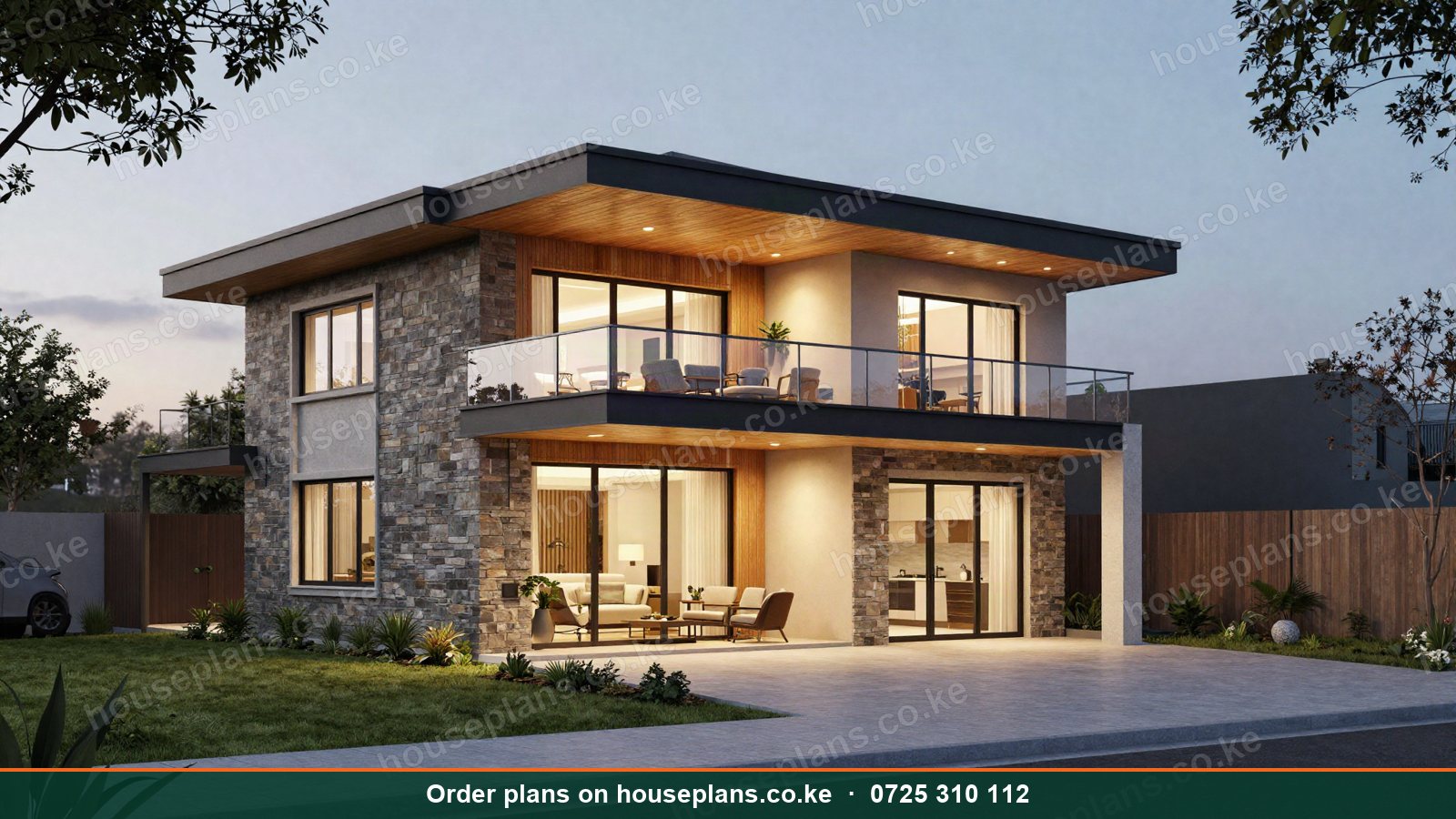
Choosing among roofing designs in Kenya is one of the biggest decisions in any house plan. The roof shapes the look of your home, its comfort and its cost. Moreover, it protects everything beneath it from heavy rain, hot sun and, in some places, hail and strong winds.
In this guide, we compare the main roofing designs used in Kenya. We cover flat concrete roofs, mabati roofs, clay and concrete tiles, hip, gable, mono-pitch and A-frame roofs. Additionally, we explain costs, common problems and which roof suits each region, from Nairobi to Mombasa, Kisii, Nyandarua and Garissa.
Talk to an architect today
Call 0725 310 112 or chat with us on WhatsApp. Send your plot size, county and the number of bedrooms, and we will reply with a quote the same day.
Why Your Roof Design Matters
The roof typically accounts for about 15 percent of your building cost. However, its impact goes far beyond money. For instance, a poor roof leaks, overheats the house and needs constant repair. Conversely, a good roof lasts decades with little maintenance.
The roof also defines your home's style. A flat roof says modern. A tiled hip roof says classic. An A-frame says holiday cabin. Therefore, choose the roof early, because it affects the structure, the walls and the drainage.
Finally, your roof affects future plans. A concrete flat roof can carry an extra floor if designed for it. Meanwhile, a timber roof cannot. Consequently, think about how your family may grow before you choose.
Flat Roof House Designs in Kenya
What Is a Flat Roof?
A flat roof is a reinforced concrete slab with a slight slope for drainage. It is surrounded by parapet walls, which hide the roof and give the house a clean box shape. Flat roofs have become the face of modern Kenyan homes.
Advantages
First, a flat roof looks modern and stylish. Second, it creates usable space for water tanks, solar panels or a rooftop terrace. Third, it can support a future upper floor if the structure is designed for it. Furthermore, it is more secure than a timber roof and resists strong winds.
Disadvantages
However, flat roofs cost about 15 to 30 percent more than pitched roofs over the same area. They also need careful waterproofing. In addition, a concrete slab absorbs heat, so the top floor can get warm without insulation.
How to Avoid a Leaking Flat Roof
Flat roofs leak when the details are wrong. Therefore, insist on these:
- A fall of about 1:80 to 1:100 towards the outlets
- Enough rainwater outlets and overflows for heavy storms
- A quality waterproofing membrane turned up the parapet walls
- A protective screed or tiles over the membrane
Browse our flat roof house plans, including the Baraka, Imani and Lavington designs.
Mabati Roof Designs in Kenya
What Is a Mabati Roof?
Mabati means corrugated or profiled metal roofing sheets. They sit on timber or steel trusses. Mabati is Kenya's most common roofing material, from rural homes to estates.
Types of Mabati
Corrugated iron sheets are the cheapest. Box profile and tile profile sheets look more refined. Additionally, stone-coated steel tiles combine metal strength with the look of clay tiles. They are popular in Nairobi, Nakuru and Eldoret.
Advantages
Mabati is affordable, light and quick to install. Moreover, it sheds heavy rain quickly. As a result, it suits high-rainfall areas such as Kisii, Kericho, Kakamega and Nyamira.
Disadvantages
Thin mabati can be noisy in heavy rain and hot under the sun. Therefore, add a ceiling with insulation. Also, choose a good gauge, such as 28 or 30, and pre-painted sheets for longevity. At the coast, choose coated sheets that resist salt corrosion.
Tile Roof Designs in Kenya
Clay Tiles
Clay tiles give a warm, classic look. They insulate well, keep the house cool and last for decades. However, they are heavy, so the roof structure must be stronger. They suit classic homes in Karen, Kitisuru and Nakuru.
Concrete Tiles
Concrete tiles look similar to clay but cost less. They come in many colours. Like clay, they are heavy and need strong trusses.
Stone-Coated Steel Tiles
These lightweight tiles are increasingly popular. They resist hail and wind, and they come in several profiles. Furthermore, they need lighter trusses than clay or concrete tiles.
Pitched Roof Shapes
Hip Roof
A hip roof slopes on all four sides. It is stable in strong winds and sheds rain from every side. Consequently, it is the most common roof shape for bungalows in Kenya. Our Neema bungalow and Kitisuru maisonette use hip roofs.
Gable Roof
A gable roof has two slopes meeting at a ridge, with triangular walls at each end. It is simple, cheap and allows high ceilings inside. The Jabali bungalow and Thika maisonette use gable roofs.
Mono-Pitch and Butterfly Roofs
A mono-pitch roof slopes in one direction. It looks modern and allows high windows on the tall side. A butterfly roof slopes inwards to a central gutter, which suits rainwater harvesting.
A-Frame Roof
An A-frame roof comes down to the ground on both sides. It is dramatic and perfect for cabins. Our Naivasha A-frame cabin is a popular Airbnb design. Churches also use A-frames, such as our Tabernacle church.
Mansard and Dutch Gable Roofs
These combine features of hip and gable roofs. They add character and sometimes usable attic space. However, they cost more and need skilled fundis.
Talk to an architect today
Call 0725 310 112 or chat with us on WhatsApp. Send your plot size, county and the number of bedrooms, and we will reply with a quote the same day.
Roof Costs Compared
Here are rough 2026 comparisons for the roof over a typical 140 m² bungalow. Exact costs depend on design, location and finishes.
| Roof type | Relative cost | Notes |
|---|---|---|
| Corrugated mabati on timber | Lowest | Add insulation and ceiling |
| Box or tile profile mabati | Low | Better look, still affordable |
| Stone-coated steel tiles | Medium | Light, durable, good looking |
| Concrete or clay tiles | Medium to high | Heavy, needs strong trusses |
| Concrete flat roof slab | Highest | 15–30% more than pitched |
For your whole-house cost, try our building cost calculator. Additionally, read the cost of building a house in Kenya.
The Best Roof for Each Kenyan Region
Nairobi Metropolitan
Flat roofs dominate new estates in Syokimau, Kitengela and Ruiru. Stone-coated tiles are popular in Karen and Runda.
High-Rainfall Areas
In Kisii, Kericho, Nyamira and Kakamega, pitched roofs with wide eaves handle heavy rain best. Lightning protection is also important in Kisii.
Cold Highlands
In Nyandarua, Limuru and Nyeri, tiled roofs and insulated ceilings keep homes warm.
The Coast
In Mombasa, Kilifi and Lamu, high pitched roofs and makuti-style roofs keep homes cool. Use corrosion-resistant materials. In Lamu Old Town, conservation rules apply.
Hot, Dry North and East
In Garissa, Turkana and Kitui, light-coloured reflective roofs, ventilated roof spaces and wide overhangs reduce heat.
Roof Features to Plan From the Start
Rainwater Harvesting
Your roof is a water catchment. Therefore, plan gutters, downpipes and tanks with the design. In dry counties, this can supply much of your water.
Solar Panels
Orient roof slopes or flat roof areas to carry solar panels and water heaters. This is especially effective in the north and east.
Rooftop Terraces
A flat roof can become an outdoor living room. It needs access stairs, balustrades and waterproofing designed for foot traffic.
Ventilation and Insulation
Roof vents, ridge ventilation and insulation keep the house cool. They are vital under mabati and concrete roofs.
Ceilings Under Your Roof
The ceiling matters almost as much as the roof. In fact, it controls heat, noise and the look of every room.
Gypsum ceilings are the most popular choice in modern Kenyan homes. They give a smooth finish and allow concealed lighting. Meanwhile, PVC ceilings are cheaper, quick to install and easy to clean. However, they can look less refined. Timber ceilings, such as tongue-and-groove boards, add warmth and suit cabins and highland homes.
Additionally, insulation above the ceiling makes a big difference. Under a mabati roof, it cuts heat and rain noise. Similarly, under a concrete slab, it keeps the top floor cooler. Therefore, we specify insulation in every roof design.
Gutters, Fascia and Rainwater Goods
Gutters protect your walls, foundations and garden. Consequently, they must be sized for Kenya's heavy downpours. PVC gutters are cheap and rust-free, while aluminium and coated steel last longer and look sleeker.
Fascia boards finish the roof edge and support the gutters. Moreover, they must be treated or made from durable materials to resist termites and rot. At the coast, choose materials that resist salt air. Finally, downpipes should discharge into tanks, soak pits or drains, never against the walls.
Roof Maintenance in Kenya
Even the best roof needs care. For example, inspect your roof after the long rains in April and the short rains in November. Look for loose sheets, cracked tiles, blocked gutters and damaged flashing.
Flat roofs need extra attention. Therefore, clear outlets of leaves and debris, and check the membrane for cracks every year. Additionally, repaint mabati roofs every eight to ten years to prevent rust. Small repairs now prevent large leaks later.
Changing or Upgrading Your Roof
Many owners want to upgrade an old roof. For instance, some replace old corrugated iron with stone-coated tiles. Others want to convert a mabati roof to a flat slab and add a rooftop terrace.
However, a concrete slab is far heavier than mabati. Consequently, the existing walls, columns and foundation must be checked by a structural engineer first. In many cases, extra columns or beams are needed. We assess existing buildings and design safe roof upgrades, including county approval for the changes.
Roofing for Hail, Wind and Lightning
Some parts of Kenya face extreme weather. Consequently, the roof must be designed for it.
Hailstorms are common in Kericho, Nandi, Kisii and parts of Nakuru. Thin mabati dents easily, so thicker gauges or stone-coated tiles are wiser there. Meanwhile, strong winds sweep across Kajiado, Isiolo and parts of the Rift Valley. Therefore, roof sheets must be fixed with more screws, and trusses must be strapped down to the ring beam.
Lightning is a serious risk in Kisii and Nyamira, which have some of the highest lightning activity in Africa. As a result, we recommend lightning conductors and proper earthing on homes in these counties. Similarly, tall buildings and churches anywhere in Kenya need lightning protection.
Matching the Roof to Your House Type
Different houses suit different roofs. For instance, a compact 2 bedroom bungalow looks best with a simple hip or gable roof. A modern maisonette suits a flat roof or a low-pitch roof hidden behind parapets. Conversely, a large villa can combine several roof forms, such as a flat roof over the living wing and a pitched roof over the bedrooms.
Commercial buildings follow their own logic. For example, churches use tall A-frames for drama and acoustics, while schools use simple pitched roofs for cost and rain. Browse our church designs and school designs to see how roofs shape these buildings.
Roofing and Building Approval
Your roof design forms part of the plans you submit to the county. Therefore, the roof plan, sections and structural details must be complete and consistent. Counties also check building height, which the roof affects directly. In some zones, a pitched roof may push the house above the height limit, while a flat roof keeps it within.
Additionally, roofs over 3 or more floors, and roofs on commercial buildings, need full structural calculations. In conservation areas such as Lamu Old Town, roof materials and shapes must follow heritage rules. Consequently, we check these requirements before finalising your roof. Read our approval guide for the full process.
Green and Cool Roofs
Green roofs are slowly arriving in Kenya. A planted layer on a flat roof cools the rooms below, slows stormwater and looks beautiful. However, it needs a stronger slab and a root-resistant membrane. Similarly, cool roofs use reflective white coatings to bounce the sun's heat away. As a result, top-floor rooms stay comfortable in hot towns such as Garissa, Lodwar and Mombasa.
Common Roofing Mistakes in Kenya
Undersized Gutters
Kenyan storms are intense. Consequently, small gutters overflow and damage walls. We size gutters and outlets for heavy rain.
Poor Truss Design
Trusses sized by guesswork can sag or fail under heavy tiles. Therefore, have them designed by an engineer.
Wrong Pitch for the Material
Each roofing material needs a minimum pitch. Too low, and water seeps in. We specify the right pitch for your chosen material.
Our Services for Roofing Designs in Kenya
Roof Design Within Your House Plan
Every house plan we create includes a full roof plan. We match the roof to your style, budget and location.
Additionally, we coordinate the roof with the walls, structure and drainage.
Flat Roof Detailing
We detail falls, outlets, membranes and parapets so your flat roof never leaks.
Moreover, we design rooftop terraces with proper waterproofing and balustrades.
Roof Structural Engineering
Our engineers design trusses, purlins and roof slabs to carry the right loads. This includes heavy tiles, water tanks and future floors.
Roof Redesign and Re-Roofing Plans
Unhappy with an existing roof? We design replacements, such as converting mabati to a flat roof or adding a rooftop terrace.
Plumbing, Drainage and Solar Layouts
We plan gutters, downpipes, rainwater tanks and solar panels as part of your free MEP drawings.
Bill of Quantities for Roofing
Our BQ lists every roofing item, from trusses to screws. Consequently, you can compare roofing quotes accurately. Learn about construction loans on our financing page.
3D Renders of Roof Options
Not sure which roof to choose? We render your house with different roof options in 3D. As a result, you can compare them visually before deciding.
Talk to an architect today
Call 0725 310 112 or chat with us on WhatsApp. Send your plot size, county and the number of bedrooms, and we will reply with a quote the same day.
Choose the Right Roof for Your Home
The right roof balances style, budget, climate and future plans. Browse all house plans, compare bungalows and maisonettes, or read our flat roof vs mabati guide. Then order your plan or call 0725 310 112.
Frequently asked questions
What is the best roofing design in Kenya?+
It depends on your budget and location. Flat roofs suit modern homes and future expansion. Hip roofs with mabati or tiles suit most homes and high-rainfall areas.
Is a flat roof more expensive than mabati?+
Yes. A concrete flat roof typically costs 15 to 30 percent more than a pitched mabati roof over the same area.
Do flat roofs leak in Kenya?+
Only when poorly detailed. With proper falls, outlets, a membrane and a protective screed, a flat roof performs well.
Which roof is best for heavy rain?+
A pitched roof with wide eaves and large gutters handles heavy rain best. It suits Kisii, Kericho, Kakamega and Nyamira.
Which roof keeps a house cool?+
Clay tiles and well-ventilated, insulated roofs keep homes coolest. Light-coloured roofs also reflect heat in hot areas.
Related searches
- Roofing designs in Kenya
- 3 bedroom roofing designs in Kenya
- Best house roofing designs in Kenya
- House roofing designs Kenya
- Two bedroom house roofing designs in Kenya
- High wind resistant roofing plans Kenya
- Polycarbonate roofing sheet structural plans Kenya
- Roof house plans Kenya
- Flat roof house plans Kenya
- House design
- Cost house plans Kenya
- Bungalow house plans Kenya
- 3 bedroom house plans in Kenya
- 3 bedroom house design in Kenya
- Low cost simple 3 bedroom house plans in Kenya
- House design Kenya