

Mortgage and SACCO Loan House Plans in Kenya: Approved Plans, BQs and Valuations Banks Want
By the HousePlans Kenya design team · 4 October 2026 · 11 min read
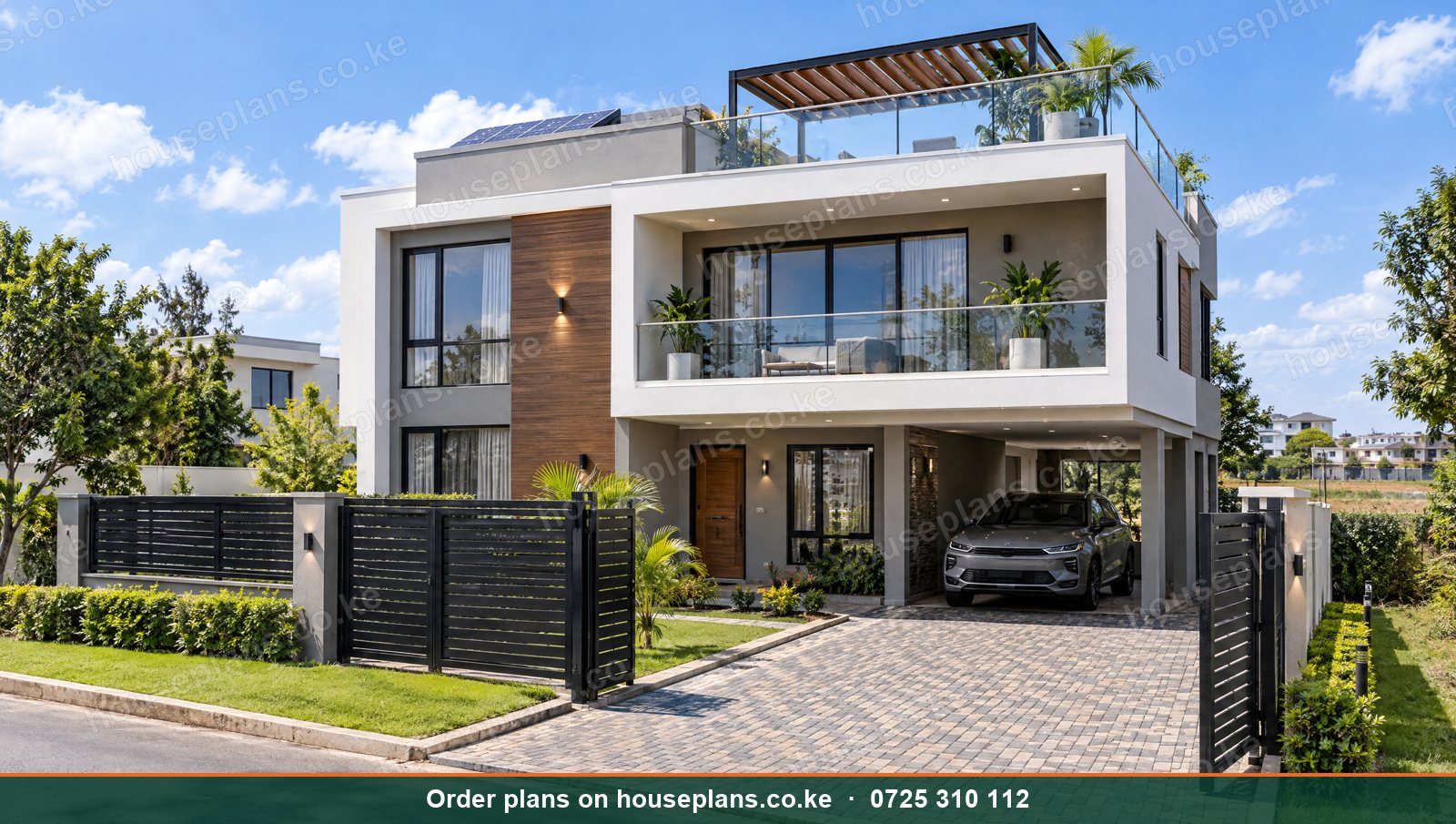
Mortgage house plans in Kenya need more than a nice design. When you borrow to build, your lender becomes a partner in the project. Consequently, banks and SACCOs want proof that the house is properly designed, approved, costed and valued. Without the right documents, loan applications stall for months. With them, funds flow smoothly from the foundation to the final coat of paint.
This guide explains how to prepare house plans for a bank mortgage, a construction loan or a SACCO loan in Kenya. We cover what lenders such as KCB, Equity, Absa, Stanbic, HF and others typically ask for, how SACCOs such as Stima, Mwalimu National, Harambee, Kenya Police and Unaitas approach home loans, and how bills of quantities, valuations and staged payments work.
Talk to an architect today
Call 0725 310 112 or chat with us on WhatsApp. Send your plot size, county and the number of bedrooms, and we will reply with a quote the same day.
Types of Home Financing in Kenya
Construction Loans
A construction loan funds the building of a new home on land you already own. Usually, the lender releases money in stages as work progresses. Consequently, approved plans and a BQ are essential, because they define what each stage costs.
Mortgages for Completed Homes
A mortgage finances the purchase of a completed home. However, the lender still checks approvals, the title and the valuation.
Self-Build Mortgages
Some lenders offer self-build or "build your own home" products. These combine land you own, approved plans and staged disbursements. Moreover, they often convert to a regular mortgage once the house is complete.
SACCO Loans
SACCO loans are usually based on your savings and deposits, often allowing borrowing of a multiple of your shares. They are popular with teachers, police officers, civil servants and employees of large organisations. Moreover, some SACCOs offer dedicated housing loans and partnerships with the Kenya Mortgage Refinance Company (KMRC).
Diaspora Mortgages
Several Kenyan banks offer diaspora mortgages and construction loans to Kenyans abroad. Read about building in Kenya from the diaspora.
What Lenders Typically Ask For
Every lender has its own requirements. However, most ask for a similar set of documents:
| Document | Why it matters |
|---|---|
| Title deed and official search | Proves ownership and checks for charges |
| Approved architectural drawings | Shows the house is legal and buildable |
| Approved structural drawings | Confirms the structure is safe |
| Bill of quantities | Shows the true cost of construction |
| Valuation report | Confirms the value of land and completed house |
| Contractor details and contract | Shows who will build and at what price |
| Proof of income | Confirms you can repay |
Always confirm the exact list with your lender, because requirements change.
Mortgage vs SACCO Loan: Which Is Better?
Both have strengths. Bank mortgages can offer larger amounts and longer terms, especially through KMRC-backed products. However, they need more documents, a deposit and strong income proof. Meanwhile, SACCO loans are often quicker and easier to qualify for, because they rely on your savings. However, loan sizes are limited by your deposits, and terms are usually shorter. Therefore, many Kenyans combine both: a SACCO loan for the early stages and a bank loan or mortgage for completion. Additionally, savings and chamas often fund professional fees.
Why Approved Plans Matter to Banks
Banks lend against security. Therefore, they need confidence that the finished house will be legal, safe and valuable. Approved plans show that the county has accepted the design. Moreover, they protect the bank from lending on a building that might be demolished or fail. Read our guide on how to get building plans approved in Kenya.
Why the BQ Is So Important
The bill of quantities tells the lender exactly how much the house will cost. Consequently, the bank can set the loan amount and plan disbursements. Additionally, the BQ helps the valuer and the bank's quantity surveyor check progress before each payment. A vague estimate is rarely enough. Read about structural drawings and bills of quantities.
How Staged Disbursements Work
Construction loans rarely pay everything upfront. Instead, money is released in stages, for example after the foundation, walling to ring beam, roofing, and finishes. Before each release, a valuer or the bank's surveyor inspects the site. Therefore, the work must match the approved drawings and the BQ. As a result, borrowers often fund the first stage from savings while the loan covers later stages.
Bank Mortgages and Construction Loans
Major Kenyan banks, including KCB, Equity, Absa, Stanbic, NCBA, Co-operative Bank and HF Group, offer mortgage and construction finance. Each has different products, rates, deposits and terms. Moreover, many partner with KMRC to offer longer-term, fixed-rate mortgages for qualifying borrowers. Therefore, compare several lenders before deciding.
Typically, banks require a deposit or equity contribution, often from 10% to 30% of the project value. Additionally, they consider your income, existing debts and credit history. Approved plans and a BQ make your application stronger and faster.
SACCO Housing Loans
SACCOs play a huge role in Kenyan housing. For example, members of Stima Sacco, Mwalimu National Sacco, Harambee Sacco, Kenya Police Sacco and Unaitas often use development or housing loans to build. Because SACCO loans are usually tied to deposits, they can be easier to qualify for than bank mortgages. However, loan limits depend on your savings.
Many SACCO borrowers build in phases. For instance, they take one loan for the foundation and walls, then another for roofing and finishes. Consequently, a phased design and a phased BQ are very useful. Moreover, some SACCOs now offer mortgage-style products with longer terms through KMRC.
Affordable Housing and Government Schemes
The government's affordable housing programme offers homes and tenant-purchase options in many counties. Meanwhile, the Housing Fund supports eligible buyers. These schemes are mainly for buying units in approved projects rather than self-building. However, they show the growing support for home ownership. Check current eligibility with official sources.
Designing a Home That Banks Like
Realistic Budgets
Lenders prefer designs that match the borrower's means. Therefore, design to your budget from the start. Read about house plans by budget in Kenya.
Standard, Marketable Designs
Valuers value homes based on what the market will pay. Consequently, practical layouts in popular styles, such as 3 and 4 bedroom bungalows and maisonettes, value well. Extremely unusual designs may value below cost.
Good Locations
Homes in growing areas with good roads, water and power value well. For example, plots in Ruiru, Syokimau, Kitengela, Ongata Rongai and Kiambu Road are popular with lenders.
Quality Materials
Durable materials and proper structural design reassure valuers. Moreover, they protect the security for the life of the loan.
Popular Designs for Financed Homes
Many of our clients finance homes such as the Baraka bungalow, Kifaru bungalow, Kilimani maisonette, Syokimau maisonette and Lavington maisonette. These designs combine practical layouts, attractive façades and realistic costs. Browse 3 bedroom house plans and 4 bedroom house plans.
Financing Rental and Investment Projects
Lenders also finance rental apartments, student hostels and commercial buildings. However, they look closely at expected rental income, occupancy and location. Consequently, a feasibility study, approved plans, a BQ and a valuation are essential. Read about apartment and rental building plans and student hostel plans.
How Much Can You Borrow?
Lenders usually limit repayments to a share of your income. For example, many banks keep total loan repayments within roughly a third to a half of your net income, depending on their policy. Consequently, your salary, other loans and the loan term decide how much you can borrow. Meanwhile, SACCOs usually lend a multiple of your deposits, often around three times, subject to your ability to repay.
Therefore, before designing, ask your lender for a pre-qualification. Then design the home to fit that amount plus your savings. As a result, you avoid designing a house you cannot finance.
Planning Your Equity Contribution
Your own contribution matters. For example, land you already own often counts towards your equity. Additionally, savings can fund the professional fees, approvals and the first construction stage. Some borrowers also use pension-backed schemes where eligible. Consequently, a clear financial plan, combining savings, land and loans, makes the project realistic.
Insurance Requirements
Lenders require insurance to protect their security. Typically, this includes building insurance during and after construction, and mortgage protection or life cover for the borrower. Moreover, contractors should carry contractor's all-risk insurance and workers' injury cover. Therefore, budget for insurance premiums alongside loan repayments.
Valuation Explained
A valuer, registered with the Valuers Registration Board, assesses the value of the land and the completed house. Before construction, the valuer uses the approved plans and BQ to estimate the finished value. During construction, the valuer inspects progress. Consequently, accurate drawings and a realistic BQ lead to a fair valuation. If the valuation falls below the cost, the lender may lend less, and you must cover the gap.
Tips for SACCO Borrowers
SACCO members often build gradually. Therefore, consider these tips. First, keep saving consistently, because deposits determine your loan limit. Next, plan the build in clear phases that match likely loan amounts. Then get the full design approved at the start, so each phase follows the same plan. Additionally, keep receipts and photos of progress, because some SACCOs ask for evidence before releasing further loans. Finally, avoid borrowing beyond what your payslip can comfortably repay.
Tips for Bank Borrowers
Bank borrowers should compare products carefully. For example, consider the interest rate type, the loan term, fees, insurance requirements and early repayment terms. Moreover, ask whether the bank has a panel of approved valuers, contractors or lawyers. Then prepare all documents before applying, because complete applications move faster. Finally, keep communication open with the bank's relationship manager throughout construction.
Step-by-Step: From Plans to Loan
First, confirm your budget and talk to your bank or SACCO about how much you can borrow. Next, order professional architectural drawings that match that budget. Then get structural drawings and a BQ. After that, submit the plans for county approval. Meanwhile, collect your title, search, ID, KRA PIN and income documents. Once approved, the lender instructs a valuer. Finally, the lender issues an offer, you sign, and disbursements begin as construction progresses.
Timelines
Design usually takes two to four weeks. Structural drawings and the BQ follow. County approval then takes several weeks, depending on the county. Meanwhile, loan processing and valuation can take several more weeks. Therefore, start early, especially if you want to build before a particular season or price rise.
Common Reasons Loan Applications Stall
Missing or Unapproved Plans
Lenders rarely release construction funds without approvals. Consequently, get approvals first.
No BQ
Without a BQ, the lender cannot set disbursement stages. As a result, applications wait.
Title Problems
Unregistered transfers, disputes or caveats stop loans. Therefore, resolve title issues early.
Budget Mismatch
If the BQ exceeds the loan plus your contribution, the lender may refuse. Design within your means.
Work Not Matching Drawings
If construction deviates from approved plans, valuers may not approve the next disbursement. Build what is approved.
Choosing a Contractor for a Financed Build
Lenders care about who builds. Therefore, choose a contractor registered with the National Construction Authority (NCA), with a track record of similar homes. Moreover, sign a clear contract based on the BQ, with a fixed price where possible, staged payments and a completion date. Some banks keep lists of approved contractors. Consequently, ask your lender early. A reliable contractor keeps disbursements flowing, because each stage passes inspection the first time.
Keeping Construction on Track
Delays cost money when you are paying interest. Therefore, plan carefully. First, order long-lead items such as windows and doors early. Next, schedule major concrete pours for dry weather. Then keep a small reserve fund to avoid waiting for a disbursement over minor costs. Additionally, hold regular site meetings with the contractor and supervisor. As a result, the project finishes on time and repayments start on a complete, valuable home.
Financing Upcountry Homes
Some lenders hesitate to finance homes in rural areas, because resale values are harder to judge. However, SACCOs often lend for upcountry homes, because the loan is backed by deposits. Consequently, many families build rural homes in Kisii, Kakamega, Meru, Nyeri and Machakos with SACCO loans. Read about simple house designs in rural Kenya.
Financing Across Kenya
Banks and SACCOs lend across Kenya. For example, construction loans fund homes in Ruiru, Kitengela, Syokimau, Nakuru, Eldoret, Kisumu and Nyeri. However, some lenders limit lending in remote or unplanned areas. Consequently, check before buying land if you plan to borrow.
Our Services for Mortgage and SACCO Loan House Plans
Lender-Ready Architectural Drawings
We prepare complete, approvable drawings that meet lender requirements. Consequently, your application moves faster.
Every design includes 3D renders, which many lenders and SACCO committees appreciate.
Structural Drawings
Our registered engineers prepare structural drawings for approval and valuation.
Consequently, valuers and bank surveyors can check the structure against clear drawings at every stage.
Bills of Quantities
We provide detailed BQs, including phased BQs for SACCO borrowers. Therefore, disbursements are easy to plan.
County Approvals
We submit plans and follow up until approval in all 47 counties.
Approved plans are usually the key document that unlocks your loan.
Budget-Led Design
We design homes that fit your loan and savings. As a result, you finish what you start.
Stage Inspections
We can inspect work at key stages, supporting your disbursement requests.
Our photo reports help lenders release funds without delay.
Support for Diaspora Borrowers
We work online with diaspora clients and their lenders. Consequently, distance never delays your application.
Talk to an architect today
Call 0725 310 112 or chat with us on WhatsApp. Send your plot size, county and the number of bedrooms, and we will reply with a quote the same day.
Prepare Your Loan-Ready Plans Today
Call or WhatsApp 0725 310 112, or email info@houseplans.co.ke. Our office is in Nairobi, and we serve every county.
Visit our financing page, read about the cost of house plans in Kenya, or order your plan.
Frequently asked questions
Do banks require approved plans for a construction loan?+
Yes. Most lenders require approved architectural and structural drawings, a BQ and a valuation before releasing construction funds.
Can I use a SACCO loan to build a house?+
Yes. Many SACCOs offer development and housing loans, usually based on your deposits. Approved plans and a BQ still help you borrow the right amount.
What is a BQ and why do banks need it?+
A bill of quantities lists every material and cost. Banks use it to set the loan amount and disbursement stages.
How much deposit do I need for a mortgage in Kenya?+
Typically 10% to 30% of the project value, depending on the lender and product. Land you own may count towards it.
Can I build in phases with a loan?+
Yes. Construction loans release funds in stages, and SACCO borrowers often take separate loans for each phase.
Related searches
- Mortgage house plans in Kenya
- Kcb mortgage house plans Kenya
- Equity bank mortgage house plans Kenya
- Absa mortgage house plans Kenya
- Stanbic mortgage house plans Kenya
- Hfc mortgage house plans Kenya
- Financing house plans Kenya
- Mortgage house plans Kenya
- SACCO house plans Kenya
- Loans house plans Kenya
- Budget house plans Kenya
- Approvals house plans Kenya
- 3 bedroom house plans in Kenya
- 3 bedroom house design in Kenya
- Low cost simple 3 bedroom house plans in Kenya
- House design Kenya
- House plans Kenya