

House Plans in Northern and Eastern Kenya: Garissa, Isiolo, Kitui, Makueni, Turkana and More
By the HousePlans Kenya design team · 1 October 2026 · 11 min read
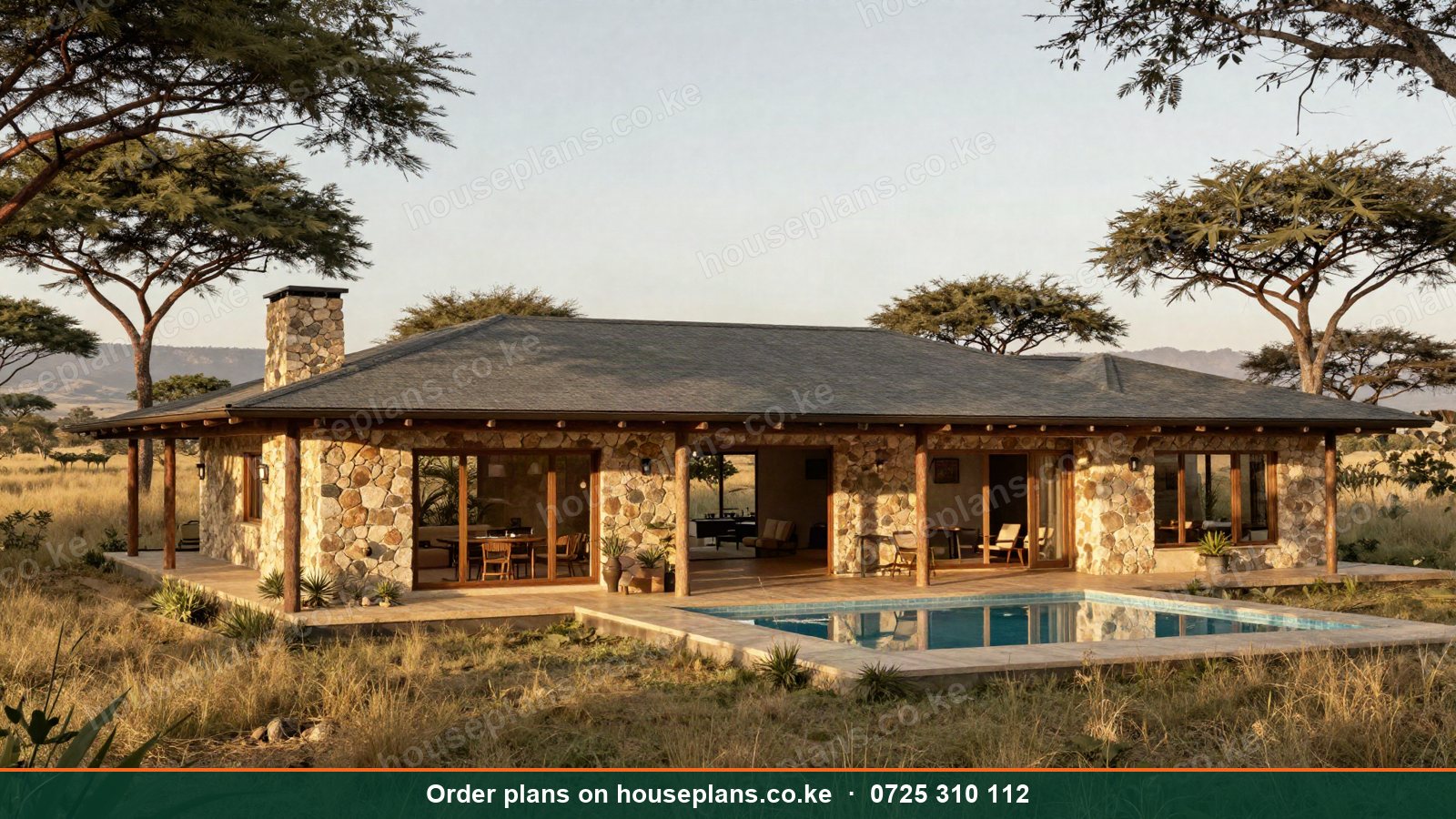
Designing house plans in Northern and Eastern Kenya means designing for heat, sun and scarce water. These counties cover most of Kenya's land area, from the semi-arid hills of Kitui and Makueni to the deserts of Turkana and Mandera. Moreover, towns such as Garissa, Isiolo, Lodwar, Marsabit and Wote are growing quickly. Consequently, demand for homes, schools, hotels and offices keeps rising.
This guide covers house designs for Kitui, Makueni, Garissa, Wajir, Mandera, Marsabit, Isiolo, Turkana, West Pokot and Samburu. We explain how to keep homes cool without heavy power bills, how to secure water, and how to use solar energy. Additionally, we recommend designs, materials and costs for family homes, rentals and commercial buildings.
Talk to an architect today
Call 0725 310 112 or chat with us on WhatsApp. Send your plot size, county and the number of bedrooms, and we will reply with a quote the same day.
Why Dryland Design Is Different
The drylands are hot, sunny and dry for most of the year. Daytime temperatures often exceed 35°C in places like Garissa, Lodwar and Mandera. Meanwhile, rain is scarce and unpredictable. Therefore, a house designed for Nairobi would be uncomfortable and expensive to run here.
Good dryland design keeps the heat out, captures every drop of rain and makes the most of the sun's energy. As a result, homes stay comfortable and running costs stay low.
Keeping Homes Cool
Thick Walls
Thick stone or block walls absorb heat slowly. Consequently, the inside stays cooler during the day. At night, the walls release heat as the air cools.
Small, Shaded Windows on the East and West
Low morning and afternoon sun heats east and west walls. Therefore, we keep windows small on these sides and shade them with overhangs, screens or verandas.
Deep Verandas
Verandas shade the walls and create cool outdoor living spaces. In fact, much of daily life happens on the veranda in hot towns.
Courtyards
Courtyards create shaded, private outdoor spaces and help air move through the house. As a result, they are a traditional feature across the region. The Savanna bungalow wraps around a central courtyard.
High Ceilings and Ventilation
High ceilings let hot air rise away from people. Additionally, high-level vents and cross-ventilation flush hot air out.
Light-Coloured, Ventilated Roofs
Light-coloured roofs reflect heat. Moreover, a ventilated roof space with an insulated ceiling keeps rooms cool beneath a metal roof.
Securing Water
Rainwater Harvesting
Although rain is scarce, it often falls in heavy bursts. Therefore, every roof should collect it. Large gutters, first-flush diverters and big tanks capture as much as possible.
Underground Tanks
Underground tanks store large volumes cheaply and keep water cool. Consequently, they are ideal in the drylands.
Boreholes
Many homes and institutions rely on boreholes. We plan the borehole position, pump house, tank tower and solar pumping system. However, some groundwater is salty or high in fluoride, so treatment may be needed.
Water-Wise Plumbing
Low-flow fittings, dual-flush toilets and greywater recycling for gardens stretch every litre.
Harnessing Solar Energy
The drylands receive some of the strongest sunshine in Kenya. Therefore, solar power is very productive. For instance, solar panels can power lights, fans, fridges and pumps. Similarly, solar water heaters provide hot water almost all year. Many remote homes run fully off-grid. We orient roofs to carry panels and plan battery and inverter rooms.
Talk to an architect today
Call 0725 310 112 or chat with us on WhatsApp. Send your plot size, county and the number of bedrooms, and we will reply with a quote the same day.
House Plans in Kitui and Makueni
Kitui and Makueni are semi-arid but well-connected to Nairobi and Mombasa. Kitui Town, Mwingi, Wote, Makindu, Emali and Mtito Andei are growing along major roads. Consequently, family homes, rentals and roadside commercial buildings are in demand. Meanwhile, rural homes on family land are common. Stone and interlocking soil blocks keep costs down. See house plans in Kitui and Makueni.
House Plans in Garissa, Wajir and Mandera
These north-eastern counties are hot and dry. Garissa Town sits on the banks of the Tana River and is the main regional hub for the north-east. Wajir and Mandera are growing county capitals near the Somali and Ethiopian borders. Here, courtyard homes, thick walls and shaded verandas suit local culture and climate. See house plans in Garissa, Wajir and Mandera.
House Plans in Isiolo and Marsabit
Isiolo sits at the gateway to northern Kenya, near Samburu and Shaba reserves. It is growing fast along the Isiolo–Moyale highway. Meanwhile, Marsabit sits on a forested mountain in the desert, with a milder climate. Moyale is a busy border town on the main road to Ethiopia. See house plans in Isiolo and Marsabit.
House Plans in Turkana, West Pokot and Samburu
Turkana is Kenya's largest county. Lodwar, the county capital, is extremely hot. Kakuma and Lokichogio host humanitarian organisations, and the Lokichar oil fields have attracted investment. Meanwhile, West Pokot ranges from hot lowlands to cool highlands around Kapenguria. Samburu's Maralal is cool, while Archers Post and Wamba are hot and dry, near major safari lodges. See house plans in Turkana, West Pokot and Samburu.
Local Building Materials
Stone
Local stone is available in many areas, including Kitui, Makueni and parts of Isiolo. It makes thick, cool walls.
Stabilised Soil Blocks
Interlocking stabilised soil blocks use local soil and little cement. Consequently, they suit areas where transporting materials is expensive.
Concrete Blocks
Concrete blocks are made locally in most towns. They work well with good insulation and shading.
Roofing
Light-coloured mabati with an insulated ceiling, or concrete roofs with reflective coatings, suit the climate.
Best House Designs for the Drylands
Courtyard Homes
The Savanna bungalow is a 4 bedroom courtyard design, ideal for hot climates.
Safari-Style Homes and Lodges
The Tsavo villa is a single-storey safari home designed for hot, open landscapes. It suits large plots near parks and conservancies. Browse our hotel and lodge designs.
Simple Family Homes
The Zawadi bungalow includes rainwater harvesting and a tank stand. It is a good affordable starting point. Read our rural house design guide.
Large Family Homesteads
The Boma homestead suits extended families on large plots.
Schools, Clinics and Offices
Growing county towns need schools, health facilities and offices. Browse our school designs and commercial designs.
Designing for Culture and Family Life
Homes in the north and east reflect diverse cultures. For instance, many families in Garissa, Wajir and Mandera prefer courtyard homes with separate guest reception areas, so visitors are welcomed without entering private family spaces. Similarly, separate entrances and prayer spaces are common requests.
Meanwhile, pastoralist families in Samburu, Marsabit and Turkana may need homes that support seasonal movement, with secure storage and space for livestock nearby. In Ukambani, family compounds often include several houses, granaries and a shared gathering area.
Therefore, we listen carefully to each family's way of life before designing. As a result, the home fits both the climate and the culture.
Dust and Wind
Strong winds and dust are common across the drylands, especially in Turkana, Marsabit and parts of Isiolo. Consequently, homes need well-sealed windows and doors, and roofs fixed firmly to resist strong gusts. Additionally, verandas and courtyard walls shelter outdoor spaces from wind-blown dust. Trees and hedges planted on the windward side act as natural windbreaks. Finally, paved paths and gravel around the house reduce dust near entrances.
Insects, Snakes and Termites
Hot, dry areas bring their own pests. For example, termites are active in many parts of the region. Therefore, foundations need anti-termite treatment, and timber should be treated or replaced with steel. Additionally, screened windows keep mosquitoes and insects out, especially near rivers such as the Tana and the Turkwel. Raised floor levels and clear surroundings discourage snakes from approaching the house.
Building in Remote Locations
Building far from major towns raises special challenges. For instance, cement, steel and roofing may travel hundreds of kilometres. Skilled labour can be scarce. Meanwhile, water for construction itself must be trucked in or drawn from a borehole.
Consequently, planning matters even more. First, prepare a detailed BQ, so you order everything in as few trips as possible. Second, use local materials such as stone and soil blocks where you can. Third, train and supervise local workers using clear drawings. Finally, schedule construction to avoid the short rainy seasons, when roads can become impassable.
Humanitarian, NGO and Institutional Buildings
Many organisations work across northern Kenya. For example, Kakuma, Dadaab and Lodwar host humanitarian agencies, while county governments are building health centres, schools and offices across the region. These buildings need durable, low-maintenance designs that work in extreme heat, often with off-grid power and water.
We design staff housing, offices, clinics, classrooms and guest houses for these clients. Moreover, we focus on passive cooling and solar power, which cut running costs dramatically in remote locations.
Safari Lodges and Tourism
Samburu, Shaba, Buffalo Springs, Meru National Park, Tsavo East and Lake Turkana attract adventurous travellers. Consequently, lodges and tented camps are important investments. These buildings must sit lightly on the land, use local materials and meet NEMA and conservancy rules. The Tsavo villa shows how a safari-style home can work in a hot, open landscape.
Rental and Commercial Opportunities
County towns across the north and east have grown sharply since devolution. For instance, Garissa, Isiolo, Lodwar, Marsabit, Kitui and Wote now host county offices, hospitals, banks and colleges. Consequently, civil servants, health workers, teachers and NGO staff need rental housing. Similarly, traders need shops, warehouses and lodgings.
Therefore, modest rental blocks, bedsitters and mixed-use buildings in these towns can earn good returns. However, design them for the heat: shaded balconies, cross-ventilation and insulated roofs make units far more attractive to tenants. Read our guide to apartment and rental building plans for more.
Landscaping in Dry Areas
Green gardens are possible even in the drylands, if you choose wisely. For example, indigenous trees such as acacias and neem give shade with little water. Meanwhile, drought-tolerant shrubs, succulents and gravel paths reduce watering needs. Additionally, greywater from showers and sinks can irrigate trees. As a result, a dryland garden can be beautiful, cool and sustainable.
Mistakes to Avoid in the Drylands
Large Unshaded Windows
Big west-facing windows turn rooms into ovens. Instead, keep them small and shaded.
Dark Roofs
Dark roofs absorb heat. Consequently, choose light colours and insulate the ceiling.
Too Little Water Storage
Rain comes rarely. Therefore, store as much as you can when it does.
Ignoring Transport Costs
Materials cost far more on remote sites. Plan deliveries carefully and use local materials.
Ukambani Homes Close to Nairobi
Kitui and Makueni sit within a few hours of Nairobi along the Mombasa Road and the Thika–Kitui road. Consequently, many Nairobi residents with roots in Ukambani build homes there. For example, towns such as Emali, Sultan Hamud, Makindu and Kwa Vonza are growing as weekend and retirement destinations. Moreover, the Konza Technopolis project nearby has drawn attention to the wider region.
These homes benefit from the same dryland principles: shade, ventilation and water storage. Additionally, local stone from Kitui and Makueni quarries keeps walling costs low. Interlocking soil blocks are also popular, because they use local soil and little cement. A compact 3 bedroom bungalow with a big veranda, a large water tank and solar power suits most families. Read our guide to low cost house plans for budget ideas.
Night-Time Comfort
Although days are hot, some dryland areas, such as Marsabit, Maralal and the Kitui hills, get cool at night. Therefore, thick walls that store daytime heat help keep bedrooms comfortable after sunset. In the hottest lowland towns, however, nights stay warm. Consequently, sleeping verandas, ceiling fans and well-ventilated bedrooms are essential there.
How Much Do House Plans Cost in Northern and Eastern Kenya?
Our fees are the same countrywide. Bungalow drawings cost KSh 25,000 to 36,700, maisonettes KSh 60,000 to 76,900, and other buildings KSh 30,000 to 76,500. Site visits in Kitui and Makueni cost KSh 10,000, while the more distant northern counties cost KSh 15,000. Every design includes free 3D renders, interior design, MEP drawings and a landscape plan. See our pricing page.
How Much Does It Cost to Build Here?
Construction costs in remote counties are often higher, because materials travel long distances. Here are 2026 guide figures at national rates:
| Design | Basic finish | Standard finish |
|---|---|---|
| 2 bedroom bungalow, 72 m² | KSh 2.1M – 2.6M | KSh 2.9M – 3.6M |
| 4 bedroom courtyard bungalow, 265 m² | KSh 7.6M – 9.5M | KSh 10.7M – 13.4M |
Expect remote northern sites to run a few percent higher. Use our building cost calculator for your own estimate.
Approvals in the North and East
Each county has its own planning department. You need architectural and structural drawings by registered professionals, ownership documents and statutory fees. Additionally, lodges near reserves and conservancies need NEMA approval. Read our approval guide.
Our Services for House Plans in Northern and Eastern Kenya
Dryland Architectural Design
We design homes, schools, clinics, offices and lodges for every northern and eastern county. Our architect visits your plot to study the sun, wind and access.
Passive Cooling Design
We design thick walls, shaded verandas, courtyards and ventilated roofs that keep homes cool without heavy power bills.
Water Harvesting and Borehole Planning
We plan rainwater harvesting, underground tanks, boreholes and solar pumping.
Solar and Off-Grid Design
We design solar power and water heating systems, including fully off-grid homes.
Structural Design
Our engineers design foundations for sandy, rocky and expansive soils.
Bill of Quantities
A BQ helps you budget for remote sites, where transport costs matter. Visit our financing page.
County and NEMA Approvals
We submit your plans and guide you through NEMA requirements for lodges and larger projects.
Talk to an architect today
Call 0725 310 112 or chat with us on WhatsApp. Send your plot size, county and the number of bedrooms, and we will reply with a quote the same day.
Build for the Drylands
A well-designed dryland home stays cool, saves water and runs on sunshine. It turns a harsh climate into a comfortable, affordable place to live, from Wote and Kitui to Garissa, Isiolo and Lodwar. Browse all house plans, see our locations page, or order your plan. Call 0725 310 112 to speak with an architect.
Frequently asked questions
How do I keep a house cool in Garissa or Lodwar?+
Use thick walls, small shaded windows on the east and west, deep verandas, courtyards, high ceilings, ventilation and a light-coloured, insulated roof.
How much is a site visit in northern Kenya?+
Site visits in Kitui and Makueni cost KSh 10,000. More distant northern counties cost KSh 15,000.
Can a home run fully on solar in northern Kenya?+
Yes. Strong sunshine makes off-grid solar very practical. We design solar power, water heating and pumping systems.
How do I get water for a home in a dry area?+
Combine rainwater harvesting, large underground tanks and, where possible, a borehole with solar pumping.
Are building costs higher in remote counties?+
Often, yes. Transporting materials over long distances adds cost, so local materials and a good BQ help control the budget.
Related searches
- House plans in northern and eastern Kenya
- North house plans Kenya
- Eastern house plans Kenya
- Drylands house plans Kenya
- Counties house plans Kenya
- Rural house plans Kenya
- Solar house plans Kenya
- 3 bedroom house plans in Kenya
- 3 bedroom house design in Kenya
- Low cost simple 3 bedroom house plans in Kenya
- House design Kenya
- House plans Kenya
- Best house designs in Kenya
- Cheap house designs in Kenya
- 2 bedroom house design in Kenya
- 2 bedroom house designs Kenya
- 2 bedroom house plan in Kenya