

Container and Prefab House Plans in Kenya: Shipping Container Homes, Modular Houses and Container Shops
By the HousePlans Kenya design team · 4 October 2026 · 11 min read
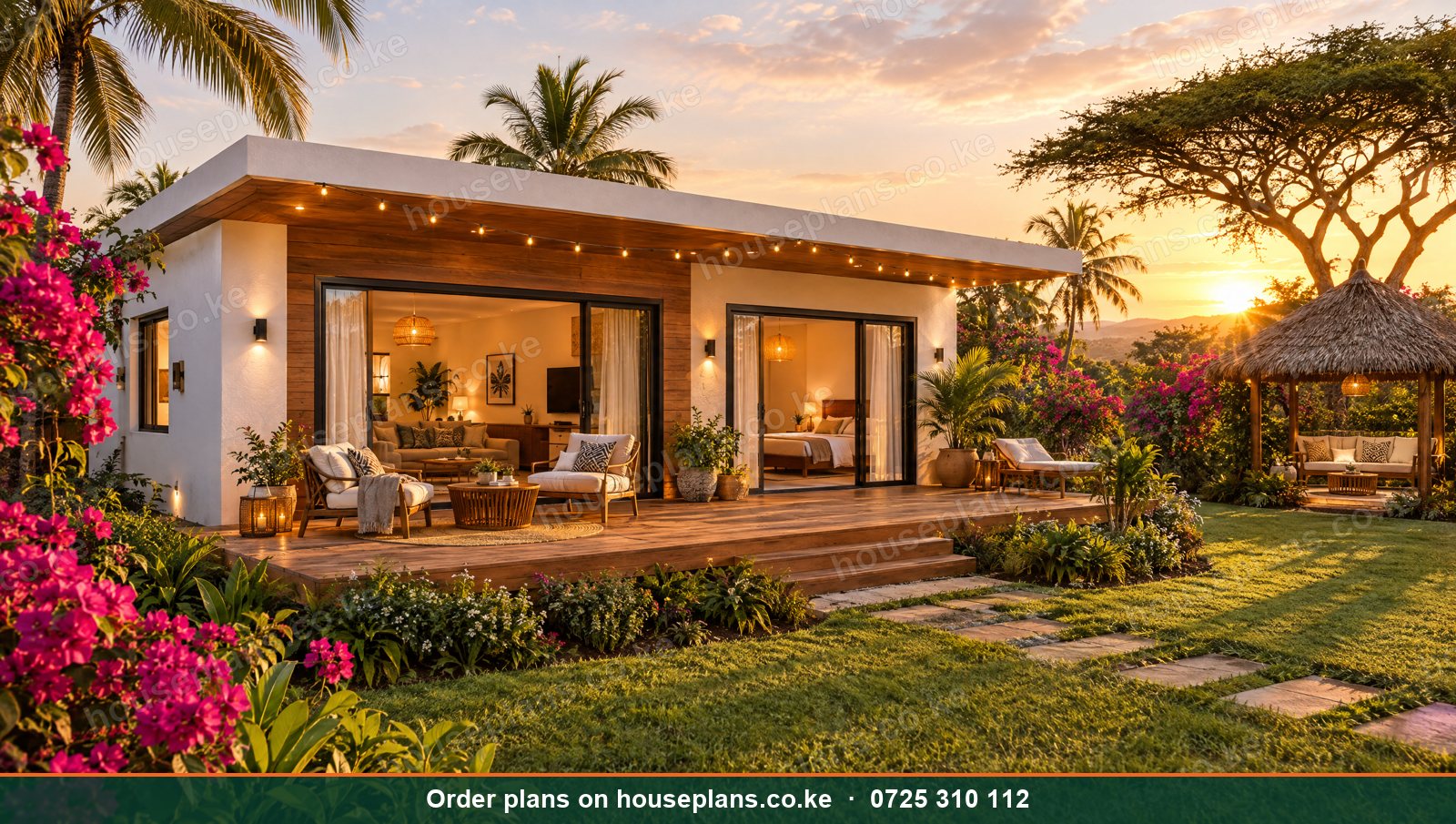
Container house plans in Kenya have moved from novelty to mainstream. Today, you will see shipping container homes in Kitengela, container Airbnbs in Naivasha, container cafés in Westlands and container shops along busy roads in Ruiru, Rongai and Nakuru. Meanwhile, prefabricated modular houses are filling the gap for fast, affordable homes on farms and in remote towns.
This guide explains everything you need to know. We cover container homes, container duplexes, Airbnb units and container commercial buildings. Additionally, we explain prefabricated and modular houses, the real costs, the design challenges and how to get approval. If you want a home or business that is fast to build and easy to move, read on.
Talk to an architect today
Call 0725 310 112 or chat with us on WhatsApp. Send your plot size, county and the number of bedrooms, and we will reply with a quote the same day.
What Is a Container House?
A container house is built from steel shipping containers. The two common sizes are 20 feet (about 6 m long) and 40 feet (about 12 m long). Both are roughly 2.4 m wide. High-cube containers are taller, at about 2.9 m, which gives better headroom once insulation and ceilings are added.
Builders cut openings for doors and windows, add insulation, fit plumbing and electrics, then finish the inside like any home. Moreover, containers can be stacked, joined side by side or cantilevered. As a result, a few simple boxes can become a stylish two-storey home.
Why Container Homes Are Popular in Kenya
Speed
A container home can be ready in weeks, not months. Much of the work happens in a workshop while the site is prepared. Consequently, Airbnb hosts and investors start earning sooner.
Mobility
Containers can be lifted onto a truck and moved. Therefore, they suit leased land, temporary sites and owners who may relocate. For example, many farm managers' houses and site offices are containers.
Cost Control
Small container homes can cost less than conventional homes of the same size. However, costs rise quickly with insulation, cladding and high-end finishes. We explain realistic budgets below.
Strength and Security
Steel containers are tough. In fact, they are designed to carry heavy loads across oceans. As a result, they resist break-ins well, especially with proper doors and grilles.
Container House Plans by Size
Single 20ft Container Studio
A 20ft container gives about 14 m² of floor space. That is enough for a compact studio with a sleeping area, a kitchenette and a shower room. It suits a guest room, a gatekeeper's cabin or a home office in the garden.
Single 40ft Container: 1 Bedroom Home
A 40ft container offers about 28 m². This fits a 1 bedroom home with a small lounge, kitchen and bathroom. For example, it makes a neat Airbnb unit near Lake Naivasha or in Nanyuki. Similarly, it suits a starter home on a farm plot.
Two 40ft Containers: 2 Bedroom Home
Placing two 40ft containers side by side creates about 56 m². Removing part of the shared wall opens up a lounge and kitchen. Consequently, you get a comfortable 2 bedroom home with a proper living space.
Container Duplex
Stacking containers creates a two-storey container duplex. Usually, living areas sit downstairs and bedrooms upstairs. Additionally, an upper container can cantilever over the lower one to shade a veranda. These designs look striking in Kitengela, Athi River and Kajiado.
Larger Container Homes
Four to six containers can form a 3 or 4 bedroom home around a courtyard. Moreover, a steel roof over the containers creates shade and a double-skin effect that keeps interiors cooler.
Container Airbnbs and Holiday Units
Container Airbnbs are a growing trend. For instance, hosts in Naivasha, Nanyuki, Diani, Watamu and the Ngong Hills rent container cabins with decks, outdoor showers and fire pits. Guests love the unique look. Meanwhile, hosts love the quick build and low maintenance. Many also photograph beautifully for listings.
Good container Airbnbs share a few features. First, they have strong insulation and shading. Next, large sliding doors open onto a deck with a view. Finally, interiors use warm timber to soften the steel. Compare with our Naivasha A-frame cabin and Sunbird cottage, which are conventional Airbnb designs. Read our guide to Airbnb and holiday home plans in Kenya.
Container Shops, Offices and Restaurants
Container Shops
Container shops are everywhere in Kenya. They are quick to set up and easy to secure. For example, a 20ft container makes a neat M-Pesa shop, boutique or hardware outlet. Moreover, several containers in a row create a small market.
Container Offices
Container offices suit construction sites, farms, schools and small businesses. Additionally, two stacked containers with an external stair make a smart two-storey office.
Container Restaurants and Cafés
Container cafés and restaurants have become popular in Nairobi, Nakuru and Mombasa. A kitchen fits in one container, while seating spreads across decks and gardens. As a result, owners open quickly with a distinctive look.
Container Commercial Centres
A container commercial centre combines many units around a courtyard or a walkway. Consequently, it creates an affordable retail hub on leased land. These suit growing towns such as Kitengela, Juja and Eldoret. See our guide to commercial building plans in Kenya.
Prefabricated and Modular Houses
What Is a Prefab House?
A prefabricated house is built in sections in a factory, then assembled on site. Sections may be wall panels, full rooms (modules) or complete small houses. Materials include light gauge steel, timber, EPS panels and precast concrete.
Advantages of Prefab Homes
Prefab homes are fast and consistent. Because work happens in a factory, weather does not delay it. Moreover, quality control is easier. Therefore, prefab suits large estates, staff housing, schools and remote sites in Turkana, Marsabit and Lamu.
Limitations of Prefab Homes
Prefab homes need good access for delivery trucks and cranes. Additionally, design options can be limited to the supplier's system. Some lenders also prefer conventional construction. Therefore, check financing early.
Read more in our guide to alternative building technologies in Kenya.
Container Homes on Farms and Remote Sites
Farmers often need housing quickly. For example, a farm manager's house, a workers' hostel or a store can be delivered as containers. Consequently, the farm starts operating sooner. Similarly, NGOs and contractors working in Turkana, Marsabit, Wajir and Lamu use containers for offices and staff housing.
Remote sites have extra needs. Therefore, we add solar power, rainwater tanks and composting or septic systems. Additionally, we raise containers off the ground to keep out termites, snakes and floodwater. These simple steps make container living comfortable far from town.
Design Challenges With Containers
Heat
Steel heats up fast in the Kenyan sun. Without insulation, a container becomes an oven by midday. Therefore, we specify insulation in walls and ceilings, a ventilated roof over the container and shading on west-facing sides. In hot areas such as Mombasa, Kisumu and Garissa, this is essential.
Condensation
Cold nights in Limuru, Nyahururu and Nanyuki can cause condensation inside steel walls. Consequently, a vapour barrier and good ventilation prevent mould.
Rust
Salt air on the coast attacks steel. As a result, coastal containers need marine-grade paint, regular maintenance and protected bases.
Structural Changes
Cutting large openings weakens a container. Therefore, our engineers add steel frames around openings and design proper connections when stacking. Never stack containers without engineered connections.
Foundations
Containers still need foundations. Usually, concrete pad or strip footings at the corners are enough. However, on black cotton soil in Kitengela, Syokimau or Athi River, deeper footings may be needed.
Buying a Good Container
New vs Used Containers
New "one-trip" containers have made a single voyage. They are clean, straight and rust-free. However, they cost more. Used containers are cheaper but vary widely in condition. Therefore, inspect every used container before buying.
What to Check
First, check the floor for rot, oil stains and soft spots. Next, look for rust holes, especially at the corners and the roof. Then check that the doors open and seal properly. Finally, ask about the container's cargo history. Containers that carried chemicals need special cleaning or replacement floors.
Where to Buy
Most containers in Kenya come through the Port of Mombasa. Dealers in Mombasa, Nairobi's Industrial Area and Athi River sell both new and used units. Moreover, many dealers offer fabrication services. However, always have our engineer review the fabrication drawings before cutting begins.
Interior Design for Container Homes
Container interiors must feel warm, not industrial. For instance, timber-look ceilings, light walls and warm lighting soften the steel. Similarly, built-in furniture saves space in narrow rooms. A fold-down table, under-bed drawers and wall-mounted shelves make a 2.4 m wide room work hard.
Light matters too. Therefore, we use large glazed doors at the ends of containers and high-level windows along the sides. As a result, rooms feel brighter and larger than their size suggests. Every design we produce includes interior design in 3D, so you can see the result before building.
Outdoor Living Around Containers
Decks, pergolas and gardens transform container homes. For example, a timber deck between two containers creates an outdoor lounge. Meanwhile, a pergola with creepers shades the steel and cools the interior. On the coast, an outdoor shower and a hammock area suit holiday guests perfectly.
Landscaping also hides the industrial edges. Additionally, planting on the west side cuts afternoon heat. Every design includes a free landscape plan, so the outdoor spaces fit with the home.
Hybrid Container and Conventional Homes
Some of the best designs mix containers with conventional construction. For instance, a stone or block core can hold the kitchen and bathrooms, while containers form the bedrooms. Alternatively, containers can sit on a concrete podium that provides a garage or a shop below.
These hybrids combine speed with comfort. Moreover, they are often easier to finance, because lenders see a permanent structure. We design hybrids for homes in Kitengela, Ngong and Nakuru, and for mixed-use buildings in growing towns.
Container Homes for Rental Income
Investors increasingly build container rental units. For example, four 40ft units on a 50×100 plot in Juja or Kahawa can house students or young professionals. Rents are modest, yet construction is fast and cheap. Consequently, payback periods can be short. However, tenants expect insulation and security, so do not skimp on these. Compare with conventional options in our guide to apartment and rental building plans.
How Much Does a Container House Cost in Kenya?
Costs vary with the container, insulation, finishes and site. Typical 2026 ranges are:
| Container project | Approximate cost range |
|---|---|
| Used 20ft container (box only) | KSh 250,000 – 450,000 |
| Used 40ft container (box only) | KSh 400,000 – 750,000 |
| Finished 20ft studio | KSh 900,000 – 1.6M |
| Finished 40ft 1 bedroom home | KSh 1.6M – 2.8M |
| Finished 2 bedroom (2 × 40ft) | KSh 3M – 5M |
| Container shop (basic fit-out) | KSh 450,000 – 900,000 |
These are guide figures only. Prices depend on the container's condition, transport distance and finish quality. For comparison, a conventional 2 bedroom bungalow of 72–88 m² costs roughly KSh 2.6M to 4M with basic to standard finishes. Use our building cost calculator to compare.
Container Homes vs Conventional Homes
| Factor | Container home | Conventional home |
|---|---|---|
| Build time | Weeks | Months |
| Mobility | Can be moved | Permanent |
| Insulation needs | High | Moderate |
| Maintenance | Rust control needed | Low |
| Bank financing | Sometimes harder | Widely available |
| Resale value | Variable | Strong |
In short, containers win on speed and flexibility. Conventional homes win on long-term value and financing. Therefore, many clients use containers for Airbnbs, shops and starter homes, then build conventionally later.
Getting Approval for Container Buildings
Many people assume containers need no approval. However, a permanent container home or shop is a building. Therefore, counties expect architectural and structural drawings, just like any other building. Temporary site offices may follow different rules, so check with your county.
We prepare drawings that show the containers, openings, connections, foundations, plumbing and electrics. Then we submit them and follow up. Read our guide on how to get building plans approved in Kenya.
Container Homes Across Kenya
In the Nairobi region, container homes and Airbnbs appear in Kitengela, Ngong and Ongata Rongai. Meanwhile, container shops line roads in Ruiru, Juja and Thika.
In the Rift Valley, container cabins suit Naivasha and Nanyuki. On the coast, they suit Diani and Watamu, with careful rust protection.
Our Services for Container and Prefab House Plans in Kenya
Container Home Design
We design container homes from single studios to 4 bedroom courtyard houses. Each plan solves heat, light and ventilation.
Moreover, we combine containers with conventional rooms where that gives better value.
Container Commercial Design
We design container shops, offices, cafés and commercial centres. Consequently, your business opens quickly with a distinctive look.
We also plan signage, lighting and customer flow, so your container stands out on a busy road.
Prefab and Modular House Design
We design homes for prefab panel and modular systems. Additionally, we coordinate with your chosen supplier.
Prefab suits staff housing, farm homes and remote projects in Turkana, Marsabit, Lamu and Samburu.
Structural Engineering
Our engineers design openings, stacking connections and foundations. Therefore, your container building is safe and approvable.
Our engineers also check that the site can take a crane or a truck for delivery.
Insulation and MEP Design
We specify insulation, ventilation, plumbing and electrics. As a result, your container stays comfortable all year.
For coastal sites, we add marine-grade coatings. Meanwhile, for cold highland sites, we add vapour barriers to stop condensation.
3D Renders
Every design includes 3D renders and a walkthrough video. Therefore, you can market an Airbnb or shop before it is built.
County Approvals
We prepare and submit plans to your county, then follow up until approval.
Talk to an architect today
Call 0725 310 112 or chat with us on WhatsApp. Send your plot size, county and the number of bedrooms, and we will reply with a quote the same day.
Plan Your Container or Prefab Project
Call or WhatsApp 0725 310 112, or email info@houseplans.co.ke. Our office is in Nairobi, and we serve all 47 counties, including Kajiado, Kiambu, Nakuru, Laikipia, Kwale and Kilifi.
Browse low cost house plans, read about timber and wooden house designs, or order your plan.
Frequently asked questions
How much does a container house cost in Kenya?+
A finished 40ft 1 bedroom container home costs roughly KSh 1.6M to 2.8M in 2026, depending on insulation, finishes and transport.
Do container houses get hot in Kenya?+
Yes, without insulation. Proper wall and roof insulation, a shade roof and good ventilation keep them comfortable.
Do I need approval for a container house?+
Yes, for permanent homes and shops. Counties expect architectural and structural drawings like any other building.
Can containers be stacked?+
Yes, with engineered connections and reinforcement around openings. Never stack containers without structural design.
Are container homes good for Airbnb?+
Yes. Container Airbnbs in Naivasha, Nanyuki and Diani attract guests with their unique look and quick build.
Related searches
- Container house plans in Kenya
- Shipping container house plans Kenya
- Container home designs Kenya
- Container commercial center plans Kenya
- Container shop designs Kenya
- Container restaurant plans Kenya
- Container office design plans Kenya
- Container home architectural drawings Kenya
- Shipping container duplex plans Kenya
- Container house plans Kenya
- Prefab house plans Kenya
- Materials house plans Kenya
- Airbnb house plans Kenya
- Commercial house plans Kenya
- Low cost house plans Kenya